Last updated November 2, 2026
 Wrought iron
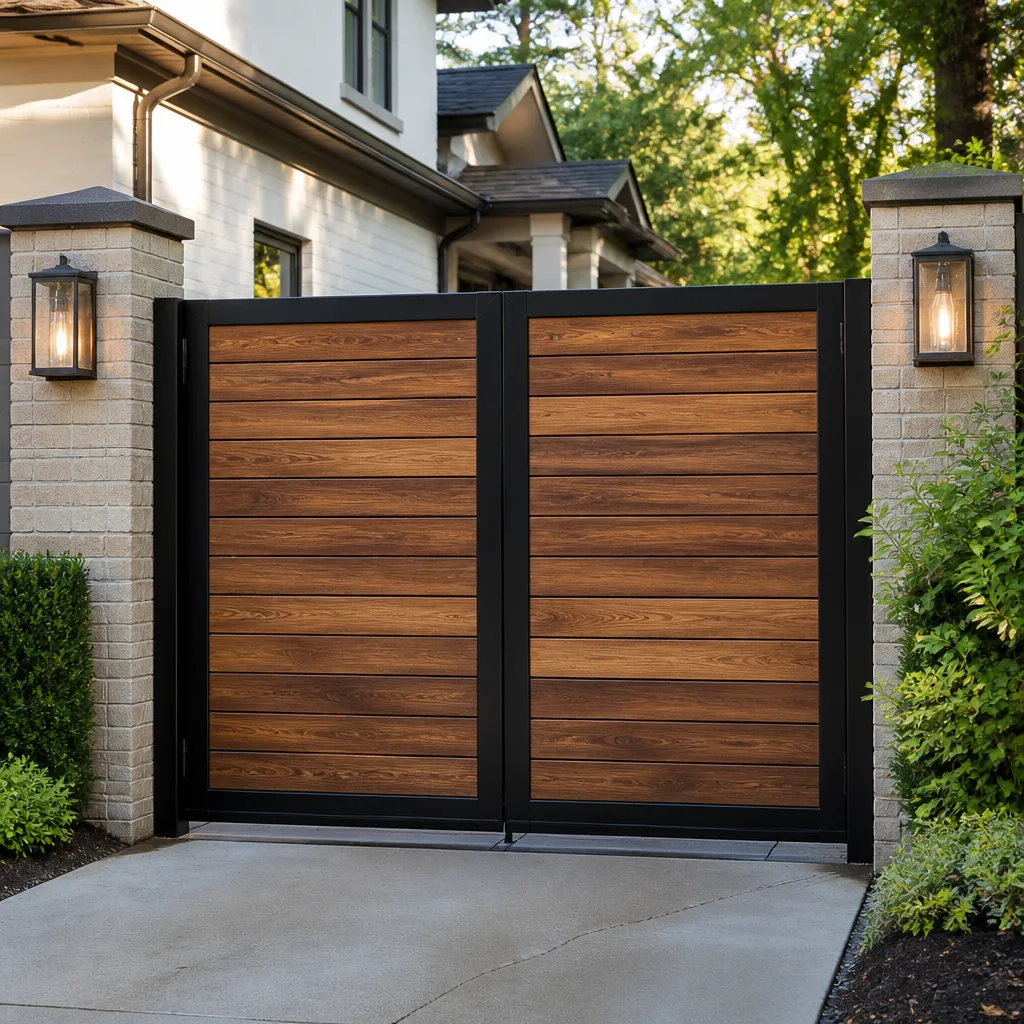 Wood & steel frame
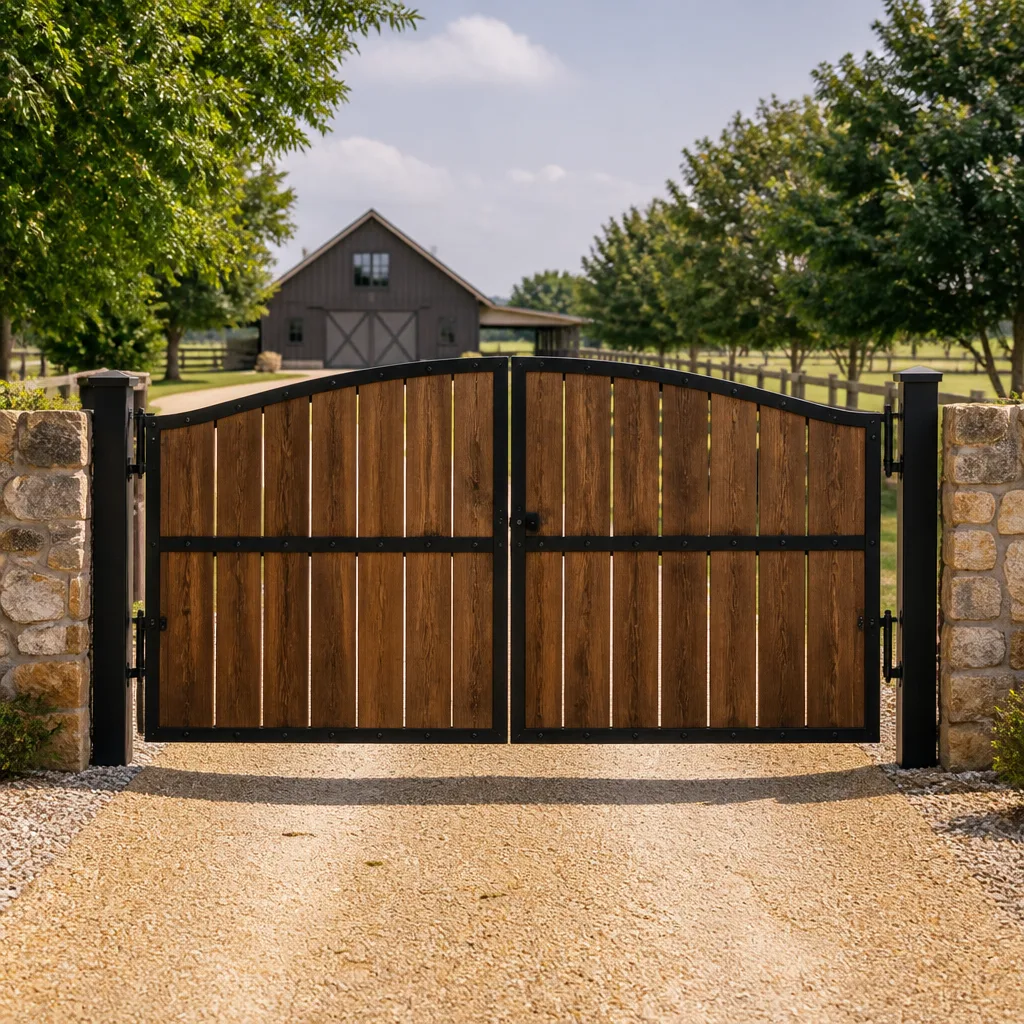 Farm & ranch
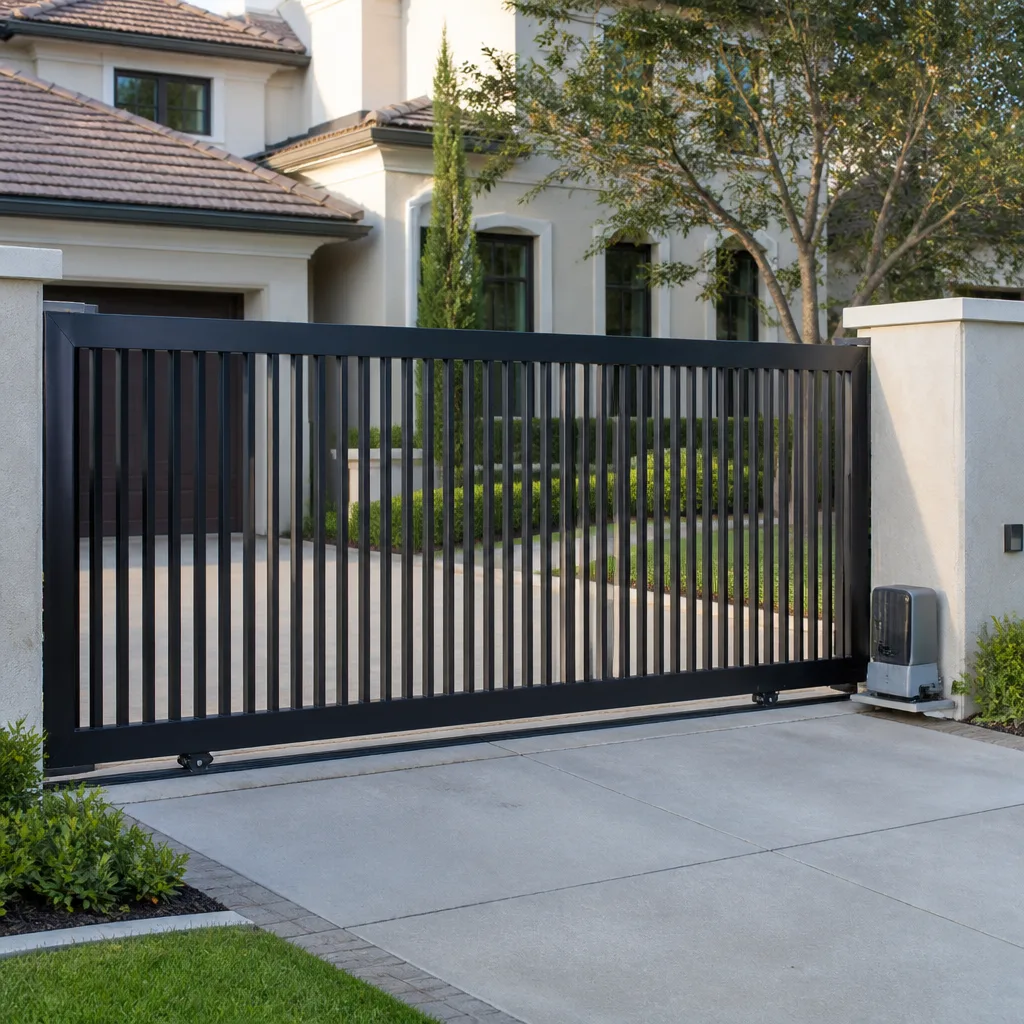 Sliding driveway gates
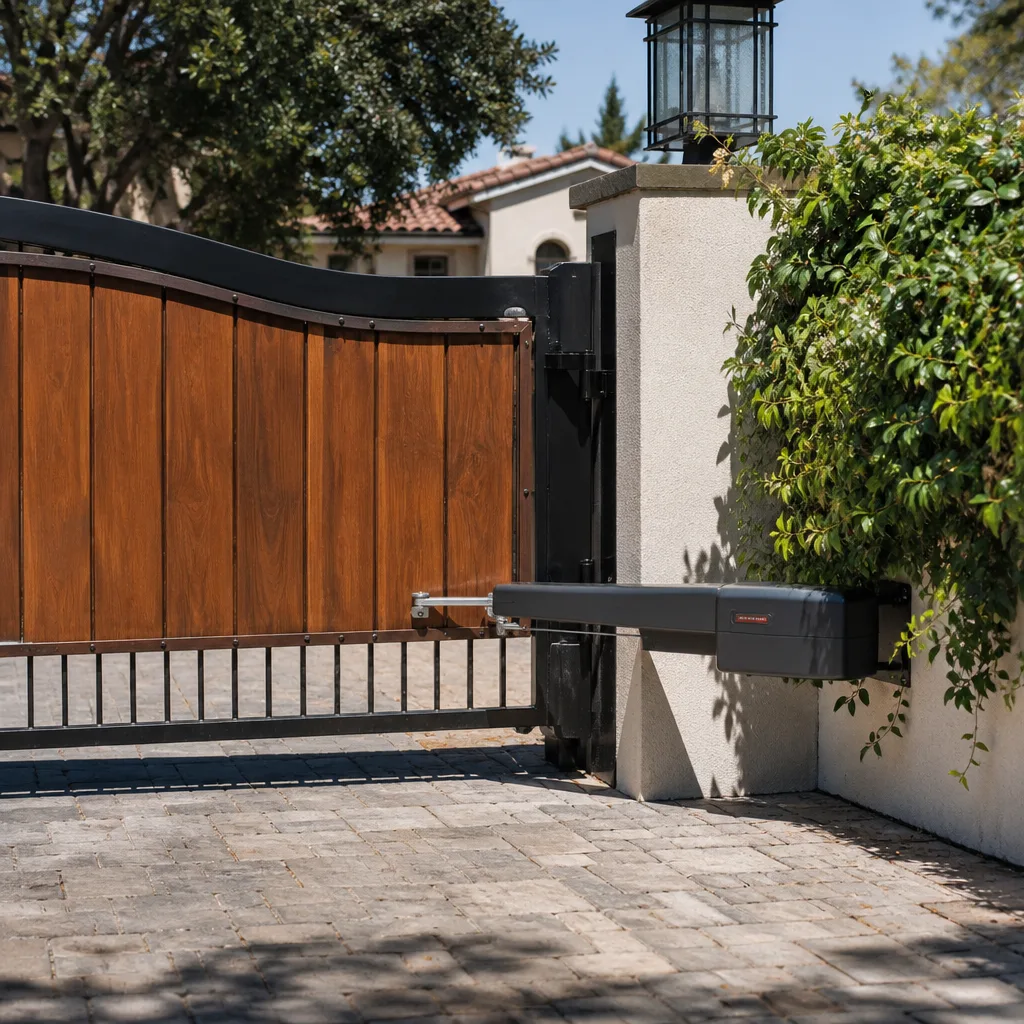 LiftMaster operators
Free on-site gate assessment - hinges, posts, and your LiftMaster or Nice gate operator checked before anything is quoted
The assessment is free and the quote is the invoice.
Get your free estimateGate Repair Troubleshooting: Common Problems and How to Fix Them
A gate that reverses after opening two feet isn’t malfunctioning. It’s obeying a safety edge or loop detector that’s feeding it a false signal. Replacing the motor here, which happens more than it should, solves nothing. This guide teaches you to read failure direction, not just failure presence, so you can isolate whether the problem is mechanical, electrical, or control-system before calling our Gate Repair services. In Menifee, where heat, dust, and hard water combine to stress gate components year-round, that diagnostic clarity saves real money.
Quick Answer
Gate repair troubleshooting starts with one question: does the gate fail mechanically, electrically, or at the control level? A gate that won’t move points to power, motor, or control board. A gate that moves but reverses points to sensors. A gate that drags or binds points to hinges, wheels, or track. Before replacing anything, watch which direction the failure happens in. That tells you which of the three systems owns the problem.
Styles & brands we work with
- Wrought iron
- Wood & steel frame
- Farm & ranch
- Sliding driveway gates
- LiftMaster operators
Table of Contents
- The Three-Category Diagnostic Split: Mechanical, Electrical, and Control
- How to Read Operator Indicator Lights and Error Codes
- Won’t Open vs. Won’t Stay Open: Two Different Failure Trees
- Loop Detector vs. Safety Edge vs. Photocell: Reading Sensor Failures
- Symptoms That Demand an Immediate Power Cutoff
- Brand-Specific Failure Patterns: Linear, Viking, Ghost Controls, DoorKing
- Menifee-Specific Factors: Heat, Dust, and Hard Water
- Common Mistakes to Avoid
The Three-Category Diagnostic Split: Mechanical, Electrical, and Control
Every gate failure falls into one of three categories. Knowing which category you’re in before you touch anything changes the entire repair conversation. We’ve watched homeowners replace a $400 control board when the real issue was a $12 hinge bushing. The categories don’t overlap much, and the tests are simple.
Mechanical: The Gate Itself
Mechanical failures are physical. The gate leaf is heavy, the hinges are worn, the wheels are flat-spotted, the track is bent, or the chain is stretched. These problems show up as grinding, dragging, binding, sagging, or a gate that sits crooked when closed. A mechanical problem almost always worsens gradually. The gate doesn’t fail overnight. It gets progressively harder to move, louder, slower, until one day the motor can’t overcome the friction anymore.
Test: Disengage the operator (every automatic gate has a manual release lever). Push the gate by hand. A healthy gate moves smoothly through its full travel with moderate, even effort. If it’s heavy, jerky, or binds at a specific point, you have a mechanical problem, not an operator problem.
Electrical: The Power Path
Electrical failures interrupt voltage between the panel and the operator. These show up as a completely dead gate: no lights, no hum, no movement. Or as intermittent behavior: the gate works in the morning but not in the afternoon, or works after rain but not during a heat wave. Loose connections, corroded terminals, failed transformers, tripped breakers, and chewed wiring all live here.
Test: Check whether the operator has any indicator light at all. Check the breaker. Check the outlet with a known working device. In Menifee, we see a lot of GFCI trips on exterior outlets after monsoon-season moisture. If the operator shows no signs of life, you’re in the electrical category until proven otherwise.
Control: The Brain and the Sensors
Control failures are the most commonly misdiagnosed. The operator has power. The motor runs. But the gate behaves wrong: it reverses mid-travel, opens on its own, refuses to close, or ignores the remote. Control problems live in the circuit board, the remote receiver, the limit switches, and the safety sensors (loop detectors, safety edges, photocells).
Test: Watch what the gate does when it fails. If the motor runs and the gate moves in the wrong direction, stops at the wrong point, or reverses without contact, that’s a control category problem. The mechanical and electrical systems are doing their jobs. Something is telling them the wrong thing.
The three-category split matters because it prevents a very common and expensive mistake: throwing a new motor at a problem that was never in the motor. In our experience across Gate Repair Menifee home service calls, roughly a third of “failed operators” are actually control-level sensor issues or mechanical drag that burned out a perfectly good motor over time.
How to Read Operator Indicator Lights and Error Codes
Your gate operator speaks. The indicator lights and blinking patterns on the control board are a diagnostic language. Learning to read even three common patterns puts you ahead of most service conversations. We work with operators from LiftMaster, FAAC, BFT, and Linear regularly in Menifee, and while each brand uses slightly different codes, the logic is consistent.
LiftMaster and Linear Residential Operators
These are the most common residential swing and slide gate operators in Southern California. Both brands use an LED on the control board that blinks in specific patterns.
- Solid green: Power is present, operator is in standby. Normal.
- Two blinks then pause: Safety sensor interruption. A photocell is blocked, misaligned, or a safety edge is triggered.
- Three blinks then pause: Force reversal. The operator detected excessive resistance and reversed to prevent damage or injury. This usually means mechanical drag or a physical obstruction.
- Five blinks then pause: Limit error. The operator can’t find or reach its open or closed limit. Check limit switch wiring or hall-effect sensor.
- Rapid flashing, no pause: Control board fault or lost programming. Power cycle first, then reprogram if it persists.
FAAC and BFT Operators
These Italian brands dominate commercial gate installations. Their diagnostic displays are more explicit. FAAC boards show alphanumeric codes like E1, E2, or A1. BFT boards use a similar numeric code system, often displayed as a blinking sequence on a small LED or an optional screen.
- FAAC E1 / BFT code 1: Photocell failure or obstruction. The motor reverses because the safety beam is interrupted. Check alignment and wiring.
- FAAC E2 / BFT code 2: Motor thermal overload or overcurrent. The operator worked too hard for too long. Look for mechanical binding or a short cycle timer issue.
- FAAC A1 / BFT code 3: Control board memory error. Reprogram the limits and run a learning cycle.
- FAAC E6 / BFT code 6: Encoder or limit switch failure. The operator can’t confirm gate position. This is not a DIY fix, and continuing to run the gate risks damaging the motor.
Always consult your operator’s manual for the exact code table for your model. The patterns above are common across many models but not universal. The point is this: your operator is already telling you what’s wrong. A Menifee electric gate repair technician reads that language directly, which is why brand-specific familiarity cuts diagnostic time dramatically.
Won’t Open vs. Won’t Stay Open: Two Different Failure Trees
A gate that won’t open and a gate that won’t stay open are different animals. Probably the single most useful diagnostic split in this entire guide. If you call a technician and describe one when you actually have the other, you’ll get a wrong diagnosis before the truck even arrives.
The Gate Won’t Open At All
- Check power. Is the operator plugged in or hardwired? Is the breaker on? Is there a GFCI that tripped? In Menifee, outdoor GFCI outlets on older homes trip frequently during heat and dust buildup.
- Check the remote. Does a wired keypad or push-button open the gate? If yes, the remote battery or receiver is dead. If no, move on.
- Listen. Does the operator hum when activated? A humming motor with no movement is either a failed capacitor or a mechanical jam the motor can’t overcome. Disengage the operator and try the gate by hand.
- Check the manual release. If the gate was manually released and never re-engaged, the operator will run but won’t couple to the gate leaf.
- Check limits or program. If you’ve had a recent power surge or the gate was reprogrammed, the limits may be erased. The operator needs a relearn cycle.
The Gate Opens But Won’t Stay Open
This has a completely different list of suspects. The most common is a sensor falsely reporting an obstruction. Here’s the sequence we work through on Menifee service calls:
- Safety edge false trigger. A worn or waterlogged safety edge sends a continuous “obstruction” signal. The gate opens, and the operator immediately reverses on the false signal.
- Photocell misalignment. A photon beam that got bumped out of alignment reads as a permanent obstruction. The gate reverses as a matter of programming.
- Loop detector phantom activation. A failing loop detector can see a vehicle where there is none. This triggers the open-and-hold cycle.
- Force setting too low. If the obstacle-detection sensitivity is set too aggressively, normal operating friction triggers reversal at the same point every cycle.
- Limit switch drift. A worn limit switch might read the fully open position as an obstruction because the position signal is imprecise. The board then reverses.
Reading the difference here is the single highest-value skill in gate troubleshooting, as covered in our Gate Repair Warning Signs: A Menifee Homeowner’s Reference Guide. A gate that won’t open at all is usually an electrical or control problem. A gate that won’t stay open is almost always a sensor or limit problem. Knowing which failure tree you’re on means calling with the right information instead of a vague “it’s broken.”
Loop Detector vs. Safety Edge vs. Photocell: Reading Sensor Failures
Three different safety sensors protect an automatic gate. Each fails in its own way, and the failure signature tells you which one is lying. This is where most generic troubleshooting guides collapse into vague advice. We’ll be specific.
Loop Detector: The Invisible Magnetometer
A loop detector is a coil of wire buried in the driveway that senses metal mass. It’s what keeps a gate from closing on a car that’s paused halfway through. A failing loop detector typically fails in one of two ways:
- Ghost detection: The detector sees a vehicle that is not there. The gate opens and stays open, or opens at random intervals. This often worsens after rain, when soil conductivity shifts.
- No detection: The detector stops seeing vehicles entirely. The gate closes on cars, or won’t auto-open for exiting traffic.
Confirming test: If you have a free-exit loop (opens the gate when a car approaches from inside), watch whether the gate opens for a car but also opens when no car is present. Ghost opening with no vehicle is a loop detector problem, not a remote or board problem. If the gate fails to open for an actual car but opens fine on the remote, the loop is dead.
Safety Edge: The Contact Sensor
A safety edge is a pressure-sensitive rubber strip mounted on the leading edge of the gate. When it contacts an obstruction, it triggers an immediate stop or reverse. Safety edges fail from sun degradation, moisture intrusion, and physical impact.
- False trigger: A waterlogged or cracked edge sends a continuous “contact” signal. The gate reverses immediately after opening, sometimes before it reaches the open limit.
- No trigger: A failed edge does nothing when compressed. The gate continues closing on an obstruction. This is the most dangerous failure mode because the safety function is silently dead.
Confirming test: If the gate reverses mid-travel at the same point every time, and you can see the safety edge is cracked, sun-faded, or swollen, disconnecting the edge at the board (with power off) and running a test cycle will confirm whether the edge is the source. If the gate still reverses with the edge disconnected, the problem is the photocell or the loop. If the gate runs normally, the edge is failed. Do not leave the edge disconnected. This is a safety circuit, and the test is to isolate the problem, not to operate the gate.
Photocell: The Light Beam
A photocell is a paired transmitter and receiver that sends an infrared beam across the gate opening. If the beam is interrupted while the gate is closing, the operator stops or reverses. Photocells fail alignment gradually. Wind, gate vibration, and accidental contact knock them out of line.
- Misalignment drift: The beam is slightly off-axis. The gate reverses sporadically, sometimes working for days between failures.
- Fully blocked or dead: Dirt, cobwebs, or a dead emitter completely block the signal. The gate refuses to close at all.
Confirming test: Most photocells have a small alignment LED. When the beam is aligned, the LED is solid. When misaligned or blocked, it blinks or goes dark. If your gate reverses and the photocell LED is blinking, the photocell is your culprit. You can clean the lens and realign the unit, but in Menifee’s dust and high-UV environment, damaged photocell housings often need replacement.
The reason to isolate these three sensor types before calling is that each one points to a different repair scope. A loop detector is a wire repair or detector module replacement. A safety edge is a new edge strip. A photocell is a realignment or a replacement pair. Knowing which one is failing means gate repair in Menifee is faster, and the parts arrive right the first time.
Symptoms That Demand an Immediate Power Cutoff
Some gate failures are inconveniences. Others are hazards. The difference is whether the gate can move unexpectedly or the operator can start a fire. These are the symptoms we tell Menifee homeowners to treat as emergencies, not scheduling items.
Cut power immediately if:
- The gate smells like burning plastic or electrical ozone. This is a shorted transformer, failing capacitor, or overloaded control board. These can and do start fires.
- The gate moves on its own, without any remote or sensor trigger. This indicates a serious control board failure or a shorted activation input. A gate that opens itself can close on a person or vehicle.
- The gate reverses direction violently mid-travel, banging against the stops. This is a force-setting or limit failure that can damage the gate structure, motor, and anyone nearby.
- There are visible sparks from the operator housing or control box. No further explanation needed.
- You hear a grinding metal-on-metal sound while the motor runs. This means the operator is working against a mechanical jam and generating heat. Every second of grinding shortens the motor’s life.
Cut power at the breaker or the dedicated disconnect switch, then leave it off until a technician arrives. Do not keep “testing” a gate that shows these symptoms. The safest thing you can do is isolate the system and make the call. For these situations, we prioritize Menifee service calls where the gate poses an active risk, but the first step is always yours: kill the power.
Brand-Specific Failure Patterns: Linear, Viking, Ghost Controls, DoorKing
Different brands have different personalities. A technician who knows the failure patterns of your specific operator arrives with a diagnosis already half-formed. Here’s what we see repeatedly across the brands we service most in Menifee.
Linear Operators
Linear residential operators, particularly the older swing-arm models, have a reputation for robust motors paired with sensitive control boards. The most common failure we see is a blown motor capacitor, which presents as a humming operator with no movement. The second most common is limit switch drift on gates that have been in service for a decade or more. Linear boards also tend to suffer from power-surge damage during Southern California thunderstorm events, which are rare but real in Menifee’s monsoon season.
Viking Operators
Viking makes heavy-duty commercial and estate-grade residential operators. These are overbuilt machines that rarely fail mechanically. What we see instead is electronics fatigue. Viking control boards, especially on older models, develop intermittent relay failures that cause random open commands or failure to respond to remotes. The motors themselves, barring water intrusion, frequently outlive the boards. A Viking gate that acts “possessed” is usually not the motor; it’s the board or the loop detector feeding it false commands.
Ghost Controls
Ghost Controls builds solar-friendly automatic gate openers that are popular on rural Menifee properties and larger lots. The most common failure pattern is voltage sag. When the battery pack ages, the operator works fine on cool mornings and fails in the heat of the afternoon. If your Ghost Controls gate gets progressively weaker through the day and dies by evening, the battery is the prime suspect. The other frequent issue we see is antenna position problems: the receiver works fine at close range but fails at normal driveway distances, which owners misread as a dead remote.
DoorKing Operators
DoorKing is the workhorse of the commercial gate world, and Menifee HOAs and business parks run them everywhere. DoorKing operators fail most often at the limit switch assembly and the gearbox seals. Gearbox oil leaks, especially on older 1601 and 1650 series models, are a telltale we see on almost every service call for gates over ten years old. Once the gearbox starts leaking, contamination follows and internal wear accelerates. The other DoorKing pattern is loop detector module failure, which is common across all brands but seems to hit DoorKing installations frequently because these are high-cycle commercial gates.
This brand-level knowledge is what makes electric gate repair in Menifee different from a generic handyman call. The diagnosis starts the moment we know the brand, because each one has a fingerprint.
Menifee-Specific Factors: Heat, Dust, and Hard Water
Menifee’s climate isn’t just background. It’s a contributing factor in most gate failures we diagnose. Heat, dust, and hard water each stress different components in different ways. Understanding these local factors helps you anticipate failures before they strand you.
Heat. Menifee regularly hits triple digits in summer. That heat does two things. First, it accelerates capacitor aging. A capacitor is a chemical component, and heat kills it faster than anything else. Second, heat causes thermal expansion in metal gate leaves and tracks. A gate that ran fine in January may bind in August because the steel expanded. We see this every summer: “the gate worked all winter and spring, now it sticks in the afternoon.” That’s thermal expansion, not a sudden mechanical failure.
Dust. Menifee’s dry, windy conditions generate fine particulate dust that infiltrates everything. Dust accumulates on photocell lenses, degrading the beam until it fails alignment. It coats control boards, acting as insulation that traps heat and accelerates electronic failure. It clogs chain drives and gear tracks, adding mechanical drag. A quarterly cleaning of photocell lenses and a light brushing of the control board enclosure would prevent a meaningful percentage of service calls we run in this area.
Hard water. Menifee’s water supply is mineral-heavy. That matters less for the gate itself and more for any adjacent irrigation. Sprinkler overspray containing calcium and magnesium deposits leaves mineral scale on gate tracks, hinges, and operator housings. That scale acts like sandpaper on moving parts and deposits conductive minerals on electrical connections. If your gate sits near lawn irrigation in Menifee, check the track for white mineral buildup. That’s not just cosmetic; it’s adding measurable friction to every cycle.
These local factors inform how we approach gate installation in Menifee too. A new gate installation done without accounting for summer thermal expansion will bind in its first August. It’s a planning detail that only matters if you live and work in this climate.
Common Mistakes to Avoid
- Replacing the motor before reading the sensors. The single most expensive misdiagnosis in gate repair. If the gate reverses, it’s a sensor. If it’s dead, it might be the capacitor or the board. The motor is often the last thing to fail, not the first.
- Disconnecting safety sensors to “make it work.” A photocell that’s been bypassed so the gate will close is a gate that will close on a person. This is never acceptable, and in Menifee, a gate that injures someone creates liability no homeowner wants.
- Force-adjusting a binding gate until it pushes through the obstruction. Cranking up the force setting to overcome mechanical drag masks the problem and stresses the motor, gearbox, and gate structure. You’re paying for the repair with accelerated wear on everything else.
- Ignoring a slowly worsening problem. A gate that gets slightly slower or slightly noisier every month is not normal aging. It’s a mechanical issue escalating toward a failed component. Catching it early is a $150 hinge replacement. Catching it late is a $1,500 operator replacement.
- Using the wrong lubricant. WD-40 is not a gate lubricant. It’s a solvent that strips existing lubricant and leaves moving parts dry. Use a silicone-based or lithium-based lubricant designed for gate hardware, and keep it off the track if your gate is a chain-drive slide model.
- Guessing at error codes instead of looking them up. Every operator manual has a diagnostic table. The code is not random. Reading the code and the table together takes three minutes and gives you a specific diagnosis instead of a guess.
- Calling a generalist. We’ve arrived at Menifee properties after a general contractor already spent two visits and several hundred dollars guessing. A gate specialist who knows the brand arrives with the right diagnostic tools, the right parts, and a shorter path to resolution.
See the difference
 Before
 After
 Before
 After
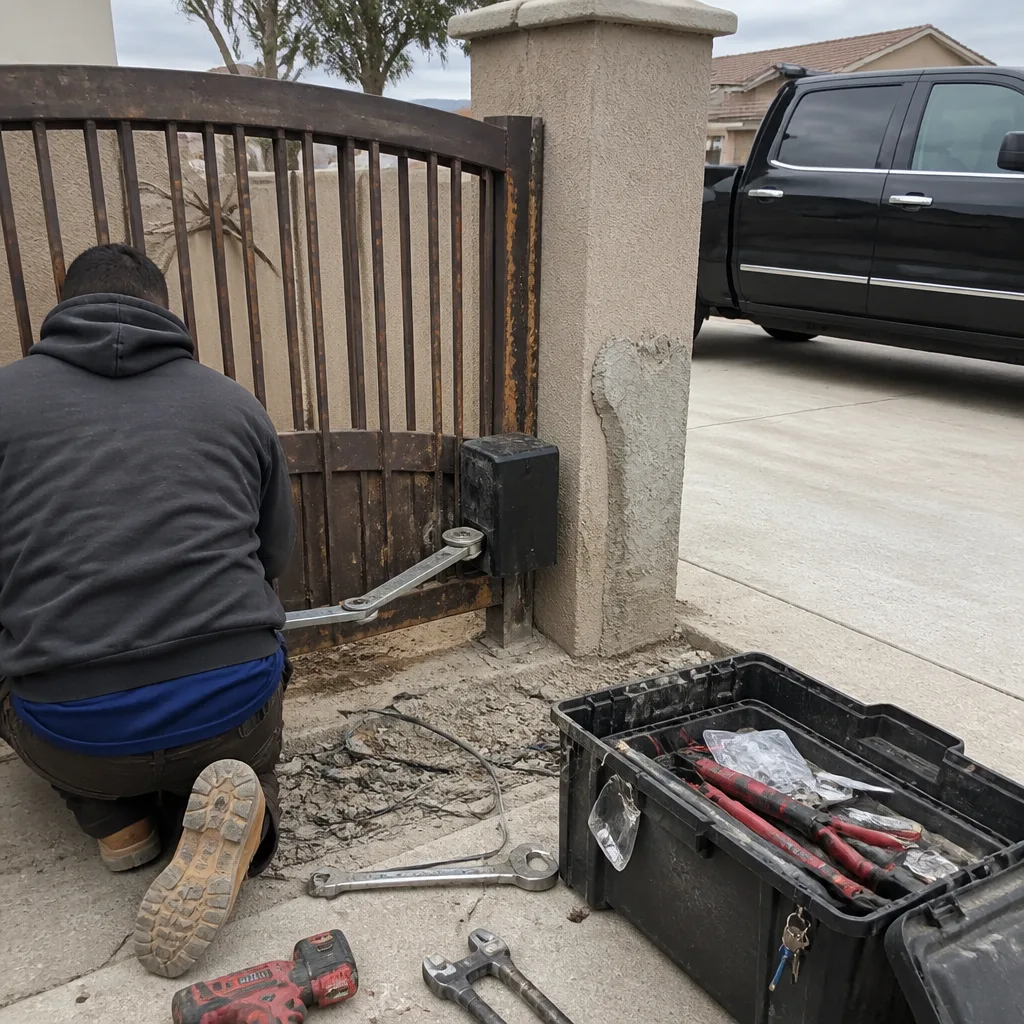 Before
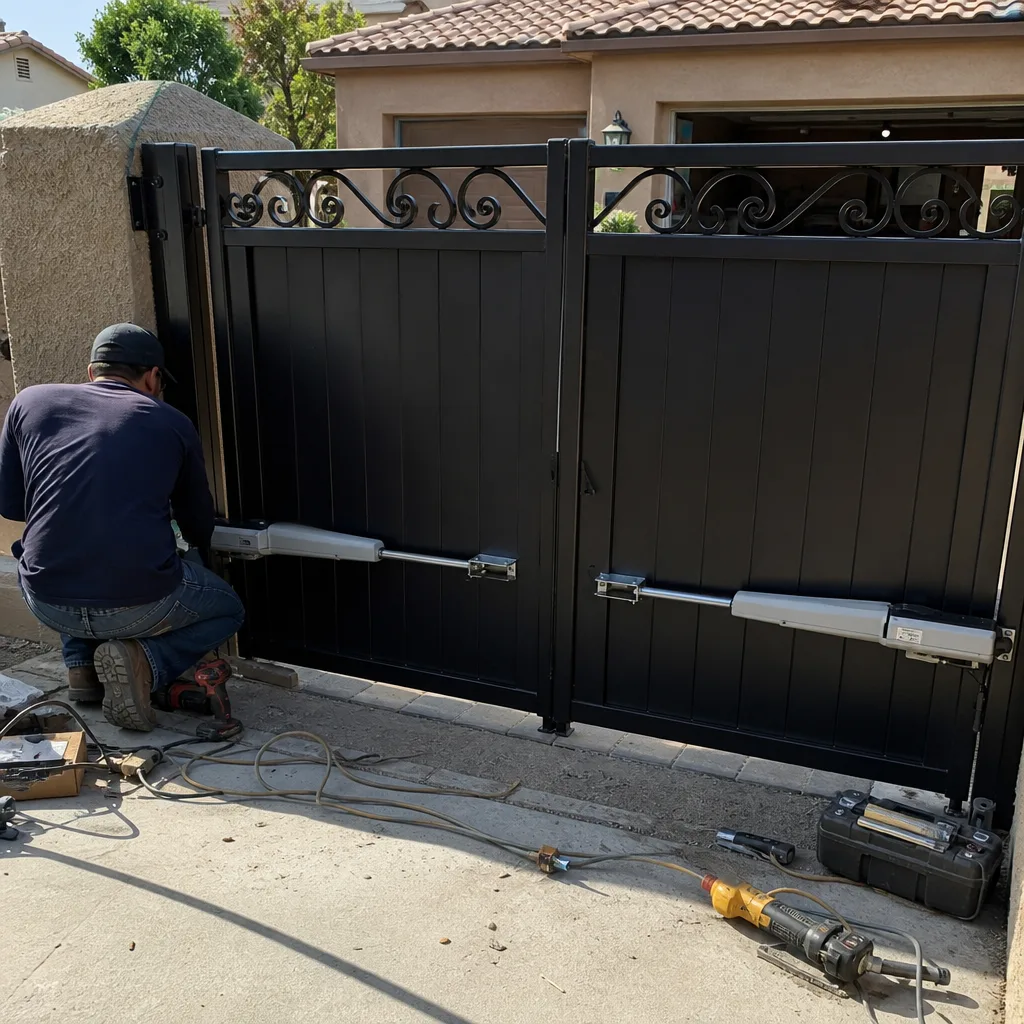 After
When to Call a Professional
Most gate repairs are not DIY projects. The diagnostic guide above is for confirming what you already suspect and for having an informed conversation when you call, not for replacing control boards or rewiring operators. Call a professional when the gate shows any of the emergency symptoms we covered: burning smells, spontaneous movement, violent reversals, or sparking. Call when the diagnosis points to control board failure, encoder errors, or loop detector issues, because these require specialized test equipment and brand-specific parts. Call when you’ve read the error code and don’t know what it means. You don’t need to diagnose perfectly. You need to know enough to describe the failure accurately. Gate Repair Menifee offers free estimates in Menifee, call (877) 752-2577.
Frequently Asked Questions
A gate that opens and immediately reverses is receiving a false obstruction signal from a safety sensor. The most common sources in Menifee are waterlogged safety edges, misaligned photocells, or a failing loop detector. Isolate which sensor by disconnecting one at a time (with power off) and running a test cycle, then call for replacement parts. Call (877) 752-2577 for an exact diagnosis, estimates are free.
Gate repair costs in Menifee vary widely by failure type. A simple hinge replacement or photocell realignment runs on the low end, while a control board replacement or motor rebuild runs significantly higher. The best way to get an accurate number is a diagnostic visit, which is why we offer free estimates. Call (877) 752-2577 and describe your gate’s symptoms, and we can give you a realistic range before we arrive.
If the gate won’t open, you can check the breaker, the remote battery, and the manual release without any special tools. If those check out and the operator still shows no response, you need a technician with a multimeter and brand-specific diagnostic experience. Opening the control box and probing connections without training risks shock and can damage the board.
A humming operator with no movement almost always means one of two things: a failed start capacitor, or a mechanical jam the motor can’t overcome. Disengage the manual release. If the gate moves freely by hand, the capacitor is the likely culprit. If the gate doesn’t move freely by hand, the mechanical jam is primary. Both are repairable, and the capacitor is a fast, inexpensive fix on most Linear and LiftMaster operators.
Given Menifee’s heat, dust, and hard water, an annual service inspection is the minimum. A technician checks hinge wear, track alignment, limit switch calibration, sensor alignment, chain tension, and control board condition. Properties with irrigation overspray or heavy dust exposure benefit from twice-annual service. Consistent service catches mechanical wear before it becomes a stranded gate.
Yes. We service residential, HOA, and commercial gate systems across Menifee, including DoorKing operators common to community entrances and LiftMaster commercial slide gates on business properties. The same brand-specific diagnostic approach applies whether the gate opens twice a day or two hundred times a day. Call (877) 752-2577 to schedule a free estimate.
The Bottom Line
Gate troubleshooting is a diagnostic discipline, not a guessing game – explore more guides & resources to build your skills. The failure direction, whether the gate won’t open, won’t stay open, or won’t close, tells you which system owns the problem. The three-category split between mechanical, electrical, and control isolates the repair before you spend money. Read the operator’s error codes, test the sensors individually, and never bypass a safety circuit to make a gate work. If the diagnosis points beyond your tools, call a gate specialist who knows your brand and works in Menifee’s specific climate. The right diagnosis saves more than the wrong replacement part. It saves time, frustration, and a second service call.
Written by the team at Gate Repair Menifee.