Last updated November 2, 2026
 Wrought iron
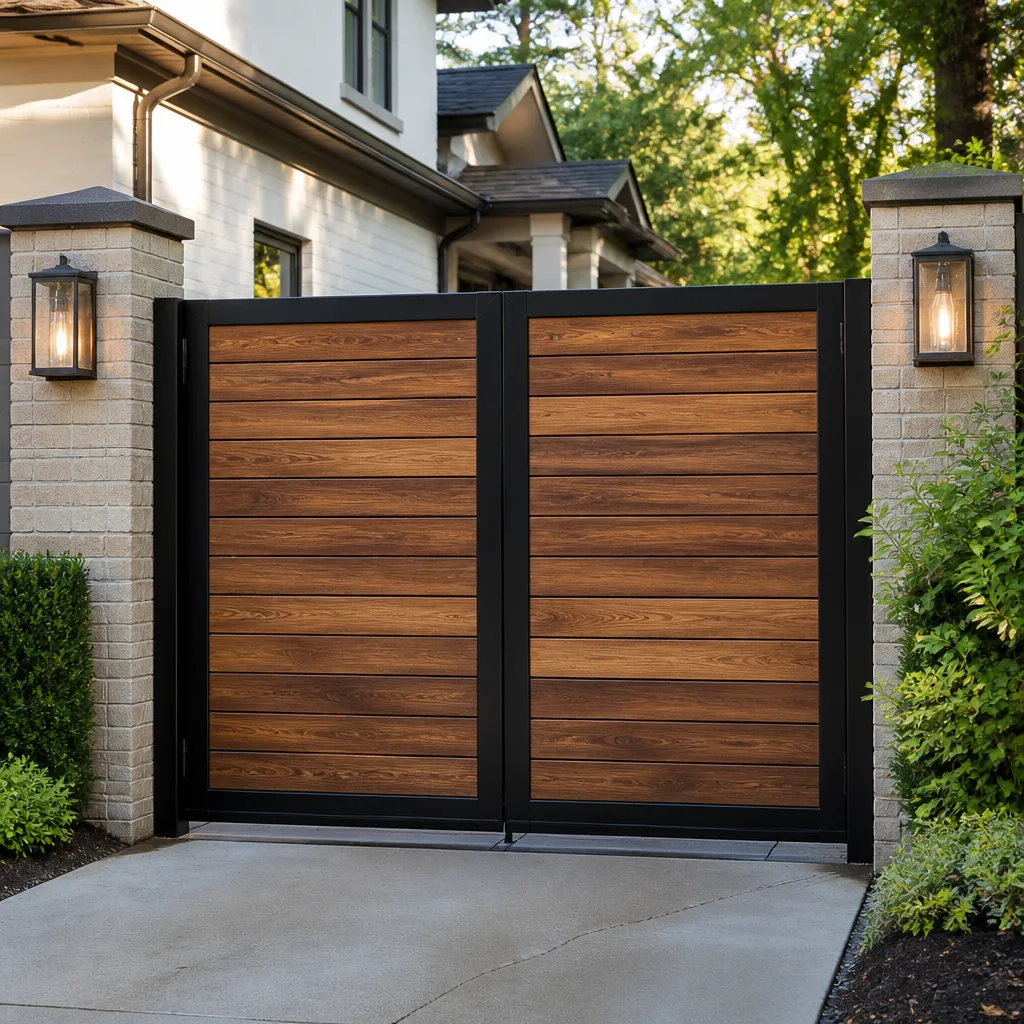 Wood & steel frame
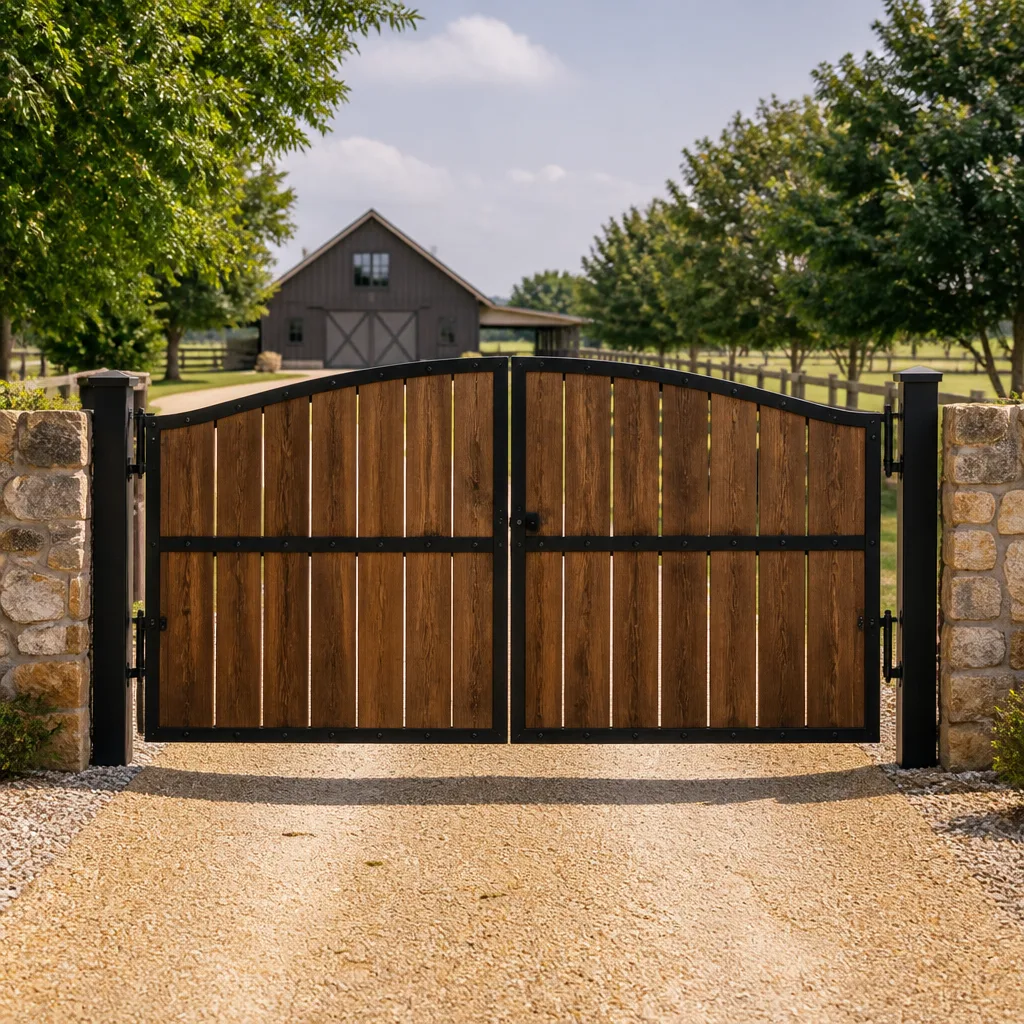 Farm & ranch
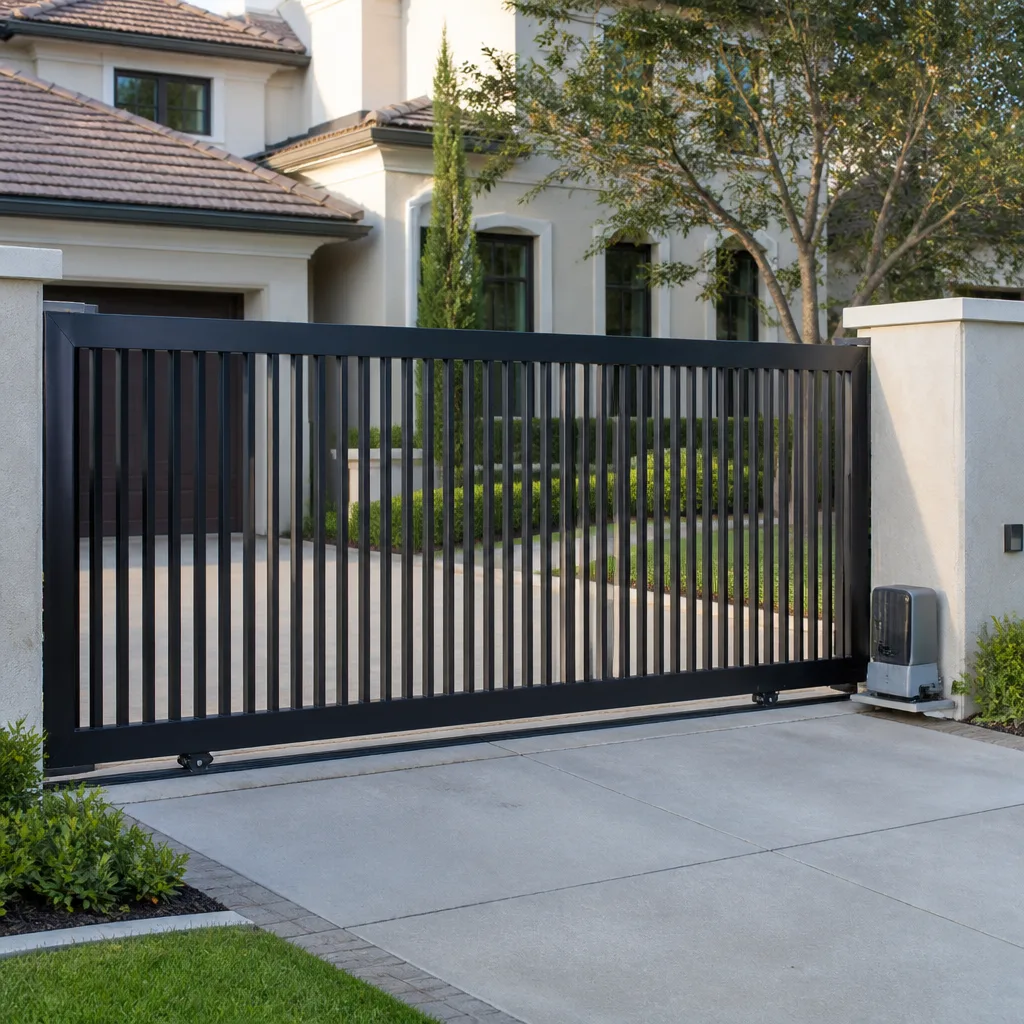 Sliding driveway gates
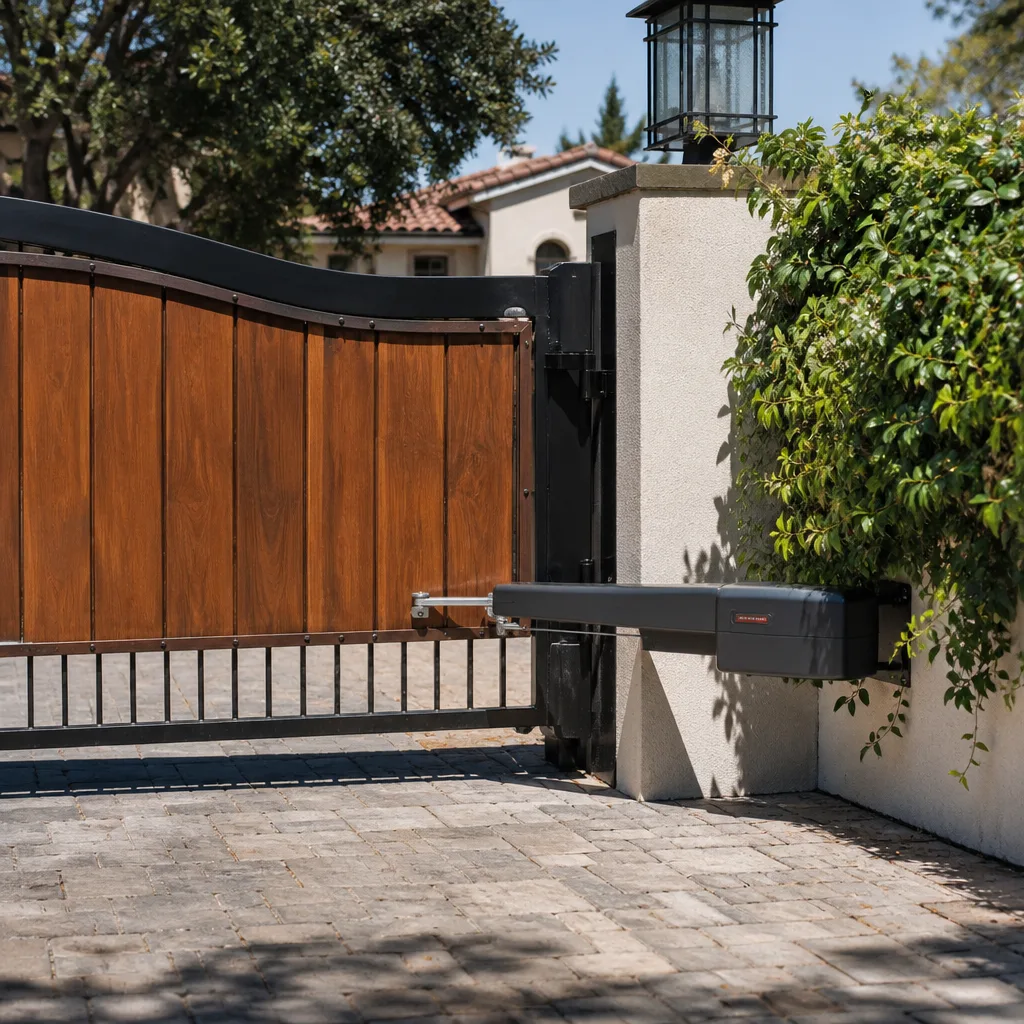 LiftMaster operators
Free on-site gate assessment - hinges, posts, and your LiftMaster or Nice gate operator checked before anything is quoted
The assessment is free and the quote is the invoice.
Get your free estimateGate Repair Warning Signs: A Menifee Homeowner’s Reference Guide
A gate that reverses direction halfway through opening is one of the most misread symptoms in residential gate service. Homeowners across Menifee assume the motor is dying, but in our experience, it’s the obstruction detection system responding to a misaligned or dirty photo eye roughly 80% of the time. That distinction matters because it’s the difference between a $120 sensor adjustment and a $700 operator replacement. This guide maps the warning signs you’ll see and hear on your gate to the specific subsystem causing them, so you know what you’re dealing with before anyone opens a panel.
Styles & brands we work with
- Wrought iron
- Wood & steel frame
- Farm & ranch
- Sliding driveway gates
- LiftMaster operators
Quick Answer
The most common gate repair warning signs in Menifee are reversal mid-cycle (usually a dirty or misaligned photo eye, not a motor failure), grinding or clicking noises (indicating gear, chain, or hinge wear), intermittent operation (pointing to control board or receiver issues), and visible hinge fatigue on swing gates. Each symptom points to a specific subsystem, and identifying it correctly determines whether you’re looking at a minor adjustment or a component replacement.
Table of Contents
- Noise Diagnostics: What Your Gate Is Trying to Tell You
- Why Your Gate Reverses Mid-Cycle (And What Actually Fixes It)
- Intermittent Operation: The Control Board vs. The Motor
- Hinge Fatigue on Swing Gates: The 3-6 Month Warning Window
- Battery Backup vs. Transformer Failure: Same Symptoms, Different Costs
- Menifee-Specific Alert: Sand and V-Track Intrusion on Slide Gates
- Common Mistakes to Avoid
- When to Call a Professional
- Frequently Asked Questions
- The Bottom Line
Noise Diagnostics: What Your Gate Is Trying to Tell You
Gates make noise when they move. That’s normal. But the type of noise, and when it happens in the travel cycle, tells you which component is wearing. Menifee homeowners call us with descriptions like “it’s making a weird sound” all the time, and the first thing we ask is what kind of sound and when it happens. Here’s the diagnostic map we use on service calls.
Grinding is a metal-on-metal sound that typically gets louder over weeks. On a slide gate, grinding almost always points to the V-track and guide wheels. Sand and grit from Menifee’s wind patterns accelerate this wear. On a swing gate operator, grinding usually means the internal gear train is losing lubrication or a gear tooth has chipped. If you have a Viking or DoorKing swing operator and hear grinding, the gear is often the culprit, and it’s a repair we handle regularly since these brands use specific gear profiles that generic shops don’t stock.
Clicking is electrical. A rapid clicking sound when you press the remote or keypad almost always means the control board’s relay is firing but the motor isn’t receiving enough current to start, or the start capacitor has failed. This is common on Linear and Ghost Controls residential operators after several years in Menifee’s summer heat, which degrades capacitor electrolyte faster than coastal climates.
Humming without movement is the most specific symptom of all. The motor is getting power and trying to turn, but something is mechanically blocking it or the start capacitor is dead. If your gate hums and doesn’t move, don’t hold the remote button down. That motor windings can overheat in under a minute. The fix is usually a capacitor replacement or clearing a physical obstruction, not a motor replacement.
Here’s the diagnostic sequence we walk through on a noise call:
- Identify the sound type: grinding (mechanical wear), clicking (electrical relay), humming (blocked motor or failed capacitor).
- Locate the source: hinge side vs. operator side, track vs. motor housing. This alone cuts diagnosis time significantly.
- Test under load: many noises only appear when the gate is moving under its full weight, not when it’s manually pushed.
- Check environmental factors: Menifee’s dust and seasonal temperature swings affect lubrication viscosity and can make a marginal component sound worse than it is.
Knowing the noise type before you call helps, but you don’t need to be the expert. When you describe a grinding noise from the hinge side on a swing gate, we show up already thinking hinge bearings, gate weight distribution, and frame alignment, not motor replacement. That’s the difference between a gate repair in Menifee diagnosis that fixes it the first visit and one that throws parts at the problem.
Why Your Gate Reverses Mid-Cycle (And What Actually Fixes It)
Few symptoms panic a homeowner faster than a gate that opens halfway, stops, and reverses back. The assumption is almost always motor failure. The reality is usually much simpler and far less expensive.
The photo eye, also called the obstruction sensor or safety beam, is a pair of small devices mounted on either side of the gate opening near ground level. One sends an infrared beam, the other receives it. When the beam is interrupted or the receiver can’t see the sender, the control board interprets it as an obstruction and reverses the gate to prevent damage or injury. It’s a safety feature working exactly as designed.
In Menifee, the most common causes of false obstruction readings are:
- Dust and spider webs on the photo eye lenses: our dry climate creates fine particulate that coats lenses faster than homeowners expect. A quick wipe with a dry cloth often restores normal operation.
- Photo eye misalignment: gate posts shift slightly with soil movement, especially in areas of Menifee with expansive clay soil. A fraction of an inch of post movement can break the beam alignment.
- Low sun angle interference: during certain times of year, direct sunlight hits the receiver and overwhelms the infrared signal. This is a known issue with older Ghost Controls and Mighty Mule sensors.
- Wiring degradation: exposed low-voltage wiring to the photo eyes degrades under Menifee’s UV exposure. Intermittent signal loss mimics an obstruction.
The fix usually takes under an hour: clean the lenses, realign the beam, and verify the signal with a test cycle. If the photo eyes check out, we move to the next tier: limit switch adjustment or control board edge settings. But in our experience, eight out of ten reversal calls in Menifee are resolved at the photo eye level.
One more thing about reversal: if your gate reverses only at the fully open position, not mid-travel, that’s typically a limit switch issue on the operator arm, not a sensor problem. The operator thinks the gate has traveled too far and retracts. This is common on older Linear arm operators and has a specific adjustment procedure that a specialist in electric gate repair in Menifee handles quickly when the brand and model are already known.
Intermittent Operation: The Control Board vs. The Motor
A gate that works sometimes but not others is the most frustrating symptom a homeowner deals with. You test it at noon and it opens fine. You come home at 7pm and nothing happens. The gate works from the remote but not the keypad. Or it works three times, then refuses for an hour. “It has a mind of its own” is the phrase we hear most.
Here’s the key insight: intermittent operation almost never points to the motor itself. Electric motors fail in predictable ways, and “sometimes works” is not one of them. When a motor fails, it fails. Intermittent operation points to the electronics: the control board, the receiver, the power supply, or the wiring connections between them.
Control board issues are the most common cause on residential systems in Menifee. The boards on brands like Linear and DoorKing are designed for continuous outdoor exposure, but our summer heat cycles and winter temperature swings stress solder joints and relay contacts over time. A relay that’s marginal may fire correctly when the board is warm and fail when it’s cold, or vice versa. We see this pattern regularly on gates that worked fine all summer and “suddenly” started failing in the fall.
Receiver problems have a distinct fingerprint: the gate always works from the hardwired keypad or push button, but the remote is unreliable. That clean split tells you the operator, motor, and power supply are fine. The issue is the radio receiver, and on many systems it’s a plug-in module that can be replaced without touching the rest of the system. On Viking and DoorKing commercial receivers, antenna placement and interference from nearby Menifee cell towers can also play a role, which is why we check signal strength as part of an intermittent diagnosis.
Power supply instability is the third tier. A transformer that’s providing marginal voltage will cause the control board to brown out and reset, which looks like a dead remote or a frozen operator. If your gate sometimes does nothing at all, even when you hear no click and there are no error lights, the transformer is high on the list.
Don’t replace a motor on a hunch. Intermittent operation is an electronics diagnosis, and the correct sequence is:
- Map the failure pattern: does it fail with the remote only, the keypad only, or everything?
- Check for error codes: many modern boards store fault codes that tell you exactly what happened during the last failed cycle.
- Test power delivery: transformer output, battery backup status, and connection integrity.
- Test the receiver separately: a known-good remote signal to the receiver will isolate receiver failure from board failure.
This is the process we run on every intermittent call in Menifee, and it produces the right diagnosis about 90% of the time before any part is ordered. Wrong guesses on intermittent gates are expensive, because the customer pays for a part that doesn’t fix it and the real problem keeps happening.
Hinge Fatigue on Swing Gates: The 3-6 Month Warning Window
Most gate failures give you weeks of warning. Hinge fatigue on a swing gate gives you months, but only if you know what to look for. And in Menifee, where swing gates range from lightweight driveway gates to heavy steel estate gates, hinge failure takes a predictable path that telegraphed its arrival long before the gate sags or jams.
The hinge assembly on a swing gate does two jobs: it carries the full weight of the gate leaf and it maintains the alignment that lets the gate swing smoothly. As hinge bearings and bushings wear, the gate leaf starts to settle. The first symptom is visual: the gate no longer sits square in its frame. The gap at the top of the hinge side gets wider than the gap at the bottom, or the latch side of the leaf drops slightly. This sag might be a quarter inch. Most homeowners don’t notice it, but it’s the first measurable sign of hinge fatigue.
The second symptom is a change in the gate’s movement quality. It starts to feel heavier at the latch end. It moves fine for the first few degrees of travel, then drags or scrapes near the closed position. On automated gates, the operator compensates at first, then starts struggling audibly. This is the grinding noise mentioned earlier, and it’s the sound of an operator working harder than it should because the gate’s weight is no longer properly supported.
The third symptom is the one that creates the emergency: stress cracking where the hinge mounts to the frame or the post. When the hinge can’t pivot smoothly anymore, the gate’s entire weight transmits through the hinge mounting plate into the frame tubing. Steel fatigue at these stress points begins as hairline paint cracks, then progresses to full structural cracking. We’ve replaced gate frames in Menifee where the hinge mount had torn completely out of the frame tube, and every one of those failures showed hairline cracks several months before the actual break.
The window to catch hinge fatigue is that 3 to 6 months between visible sag and structural cracking. Here’s what to check:
- Measure the gaps: the gap between the gate leaf and the frame should be consistent all the way around. A difference of more than a quarter inch between top and bottom says hinge wear.
- Look for paint stress lines: hairline cracks in the paint radiating from hinge mounting bolts are the earliest external sign of metal fatigue underneath.
- Listen for scraping: a gate that scrapes near the closed position but not near the fully open position is telling you the hinge side has dropped.
- Feel the hinge play: this is a diagnostic step that takes one minute and requires no disassembly. A well-maintained hinge should have minimal lateral play when the gate is lifted.
Hinge replacement on a Menifee swing gate runs significantly less than full gate installation in Menifee, and catching hinge fatigue in the sag stage usually saves the frame. Wait for the crack, and the fix often involves welding, a frame reinforcement, or a full leaf replacement. The repair window is real, and it’s measured in months, not weeks.
Battery Backup vs. Transformer Failure: Same Symptoms, Different Costs
Two components on an automated gate produce nearly identical surface symptoms when they fail: the battery backup and the transformer. Both cause the gate to stop responding, both can cause the operator to beep without moving, and both are often misdiagnosed by homeowners and general contractors alike. The difference matters because a transformer replacement is typically under $200 with labor, while battery backup replacement on some systems can exceed $400, and misdiagnosing the direction means paying for both.
Here’s how to tell them apart before making a call.
A failed transformer means the gate is not receiving proper AC power from the electrical supply. The symptoms are usually complete and consistent: no response from the remote, the keypad, or the manual button. The operator shows no power lights. There might be a faint click when you press the remote, or there might be nothing at all. If you have a test meter, the transformer output is below the rated voltage, often zero. In Menifee, transformer failures spike during the summer months when utility voltage fluctuates under load, and during storm season when power surges hit older transformers.
A failed battery backup produces a more confusing set of symptoms. The gate may work fine while utility power is present, then fail when the power goes out, which is the opposite of what the battery is supposed to do. Or the battery may maintain partial function: the keypad works but the motor won’t run under load, or the gate opens but closes slowly. Some operator boards show a specific battery status light or error code. And a swollen or corroded battery housing is a definitive visual sign.
The fastest way to narrow it down:
- Check whether the gate works on utility power: if it works when the house has power but not during an outage, the battery backup is the suspect.
- Check whether the gate has any power at all: no response to anything, no lights, no keypad beep means the transformer is the likely culprit.
- Look at the battery itself: corrosion, swelling, or a battery older than three years in Menifee’s heat points to a replacement.
On brands like Linear and Viking, the battery backup is an integrated component that requires board-level knowledge to diagnose correctly. We see homeowners in Menifee replace transformers based on a “no power” symptom when the actual issue was a battery that had shorted and was pulling down the transformer voltage. The correct diagnostic sequence checks both, and a Menifee electric gate repair call that starts with brand familiarity usually finds the answer in the first fifteen minutes.
Menifee-Specific Alert: Sand and V-Track Intrusion on Slide Gates
Slide gates in Menifee face a specific environmental challenge that swing gates avoid: the V-track sits at ground level, and ground level in this area is dusty. The combination of our dry climate, seasonal winds, and sandy soil means V-tracks accumulate fine particulate faster than in coastal or humid climates. This shows up as a set of symptoms that look like mechanical wear but are often just a cleaning issue.
What you’ll notice: the gate moves in a jerky or bumpy fashion, especially in the middle third of its travel. It sounds gravelly. The operator works harder, which you may hear as increased motor strain. In the worst cases, the gate stops mid-travel and reverses, mimicking the photo eye problem described earlier. The giveaway is the condition of the track itself: a gray-brown accumulation in the bottom of the V-groove, and visible scoring on the track surface where the gate wheels have been grinding through the grit.
Here’s the critical distinction: if the V-track wheels are intact and the gate is still sitting at the correct height, the gritty movement is usually particulate contamination, not component failure. The fix is a cleaning procedure, not a parts replacement. But if the gate has been grinding through sand for months, the abrasive action accelerates wheel wear, and eventually the wheels develop flat spots. At that point, it becomes a mechanical repair.
The preventive sequence for Menifee slide gate owners:
- Inspect the V-track weekly during windy season: if you can see sand accumulation in the track groove, it’s affecting gate movement.
- Keep the track clear: sweeping or blowing out the V-groove takes minutes and extends wheel life substantially.
- Watch for wheel wear patterns: a loud grinding noise that persists after cleaning means the wheels themselves are worn and need replacement.
- Check the gate’s alignment after the build-up is removed: if the gate has been riding high on packed sand, removing the sand can change its alignment and may require an adjustment.
We’ve responded to Menifee slide gate calls where the homeowner was ready to replace the entire track system, and the actual fix was a thorough cleaning and a wheel inspection. However, don’t assume cleaning solves everything. A track that’s been neglected through multiple windy seasons can require wheel replacement and track resurfacing, and we’ll tell you honestly which situation you have when we look at it.
Common Mistakes to Avoid
- Assuming motor failure from every symptom: a motor that’s genuinely failed usually gives continuous, consistent failure. Reversal, intermittent operation, and clicking are sensor, board, or capacitor issues in the majority of Menifee service calls we run. Replacing a motor without ruling out the cheaper failures wastes money.
- Ignoring subtle noise changes: that faint grinding you notice at the hinge end of the travel is doing measurable damage every cycle. The sooner it’s diagnosed, the smaller the repair. Waiting until it’s loud usually means the difference between a bearing replacement and a frame repair or new gate installation.
- Using generic parts on brand-specific systems: a generic capacitor that’s “close enough” on a Linear or DoorKing board can damage the board it’s connected to. Brands matter. We carry or order the correct parts for the specific system on your property, which prevents repeat failures.
- Lubricating without cleaning first: spraying lubricant into a dusty hinge or V-track creates an abrasive paste that accelerates wear. Clean first, then lubricate, in Menifee’s dust conditions.
- Adjusting limit switches without understanding the operator: a homeowner who tightens a limit adjustment to stop a reversing gate is often masking a photo eye issue. The gate now opens fully, but the safety reversal has been defeated, which is a serious safety risk.
- Delaying battery replacement beyond three years: Menifee’s heat shortens battery backup lifespan. A battery older than three years is on borrowed time, and the failure will happen during an outage when you need the gate working most.
When to Call a Professional
Some symptoms resolve with a cleaning or a minor adjustment, and some don’t. Call a professional when the gate reverses and cleaning the photo eyes doesn’t fix it within one or two attempts. Call when you hear grinding that persists for more than a day; it’s doing structural damage. Call when the gate works intermittently with no clear pattern; that’s an electronics issue that won’t heal itself. Call immediately if the gate hums without moving, if you see visible hinge sag or paint cracking, or if the gate has ever reversed and struck anything. For Menifee homeowners, Gate Repair Menifee home is the gate specialist that comes to you. Estimates are free, and we’ll tell you exactly what’s wrong and what it costs before any work begins. Call (877) 752-2577 to schedule a service call.
Frequently Asked Questions
Gate repair in Menifee typically ranges from $90 to $340 for common fixes like photo eye realignment, capacitor replacement, or limit switch adjustment, while operator replacement or hinge rebuilds run higher depending on the brand and gate size. We provide a written price quote before any work starts, so you know the cost going in. Call (877) 752-2577 for a free estimate on your specific gate.
Many common repairs, including photo eye alignment, track cleaning, and capacitor replacement, are completed the same day, while more involved work like motor replacement or hinge rebuilding may require ordering brand-specific parts. We carry common parts for major gate brands on hand and can quote your repair timing when we diagnose the system. Call (877) 752-2577 to check availability.
We service nine major gate brands including LiftMaster, FAAC, BFT, Linear, Viking, Ghost Controls, DoorKing, Elite, and Mighty Mule, covering everything from entry-level residential to commercial-grade systems. If your gate uses a different brand, we’ll still evaluate it, but these nine represent the systems we know best and stock parts for.
A gate that moves correctly in one direction but fails in the other usually points to a limit switch, an obstruction sensor alignment issue, or a control board directional relay problem, not a motor failure. The specific direction that fails tells us which component to check first, and the fix is often a simple adjustment.
Electric gate operators contain high-voltage components, heavy springs, and moving parts that can cause serious injury, and the safety systems like photo eyes and edge sensors must be properly calibrated after any repair. Leave the electrical and mechanical work to a trained professional. What we recommend to Menifee homeowners is regular visual inspection and keeping the track and photo eyes clean, not opening panels or adjusting mechanisms.
Gate operators in Menifee typically last 8 to 12 years with proper maintenance, though our summer heat and dust conditions shorten the lifespan of capacitors and batteries relative to coastal climates. Regular cleaning, prompt attention to noise changes, and battery replacement every three years extend the life of the entire system. Call (877) 752-2577 for a free estimate on maintaining or replacing your gate operator.
The Bottom Line
Gate warning signs are decodable. A reversing gate is usually a sensor issue. A clicking gate is usually electrical. An intermittently working gate points to the control board or receiver, not the motor. Hinge sag gives you months of warning before structural failure. A dead battery and a dead transformer look identical but cost very different amounts to fix. And in Menifee, sand in a slide gate’s V-track creates symptoms that mimic wear but are often solved with cleaning. Read the signs correctly and you’ll know what kind of repair you’re facing. When you want a specialist who already knows your brand, call Gate Repair in Menifee at (877) 752-2577 for a free estimate.
Written by the team at Gate Repair Menifee.
See the difference
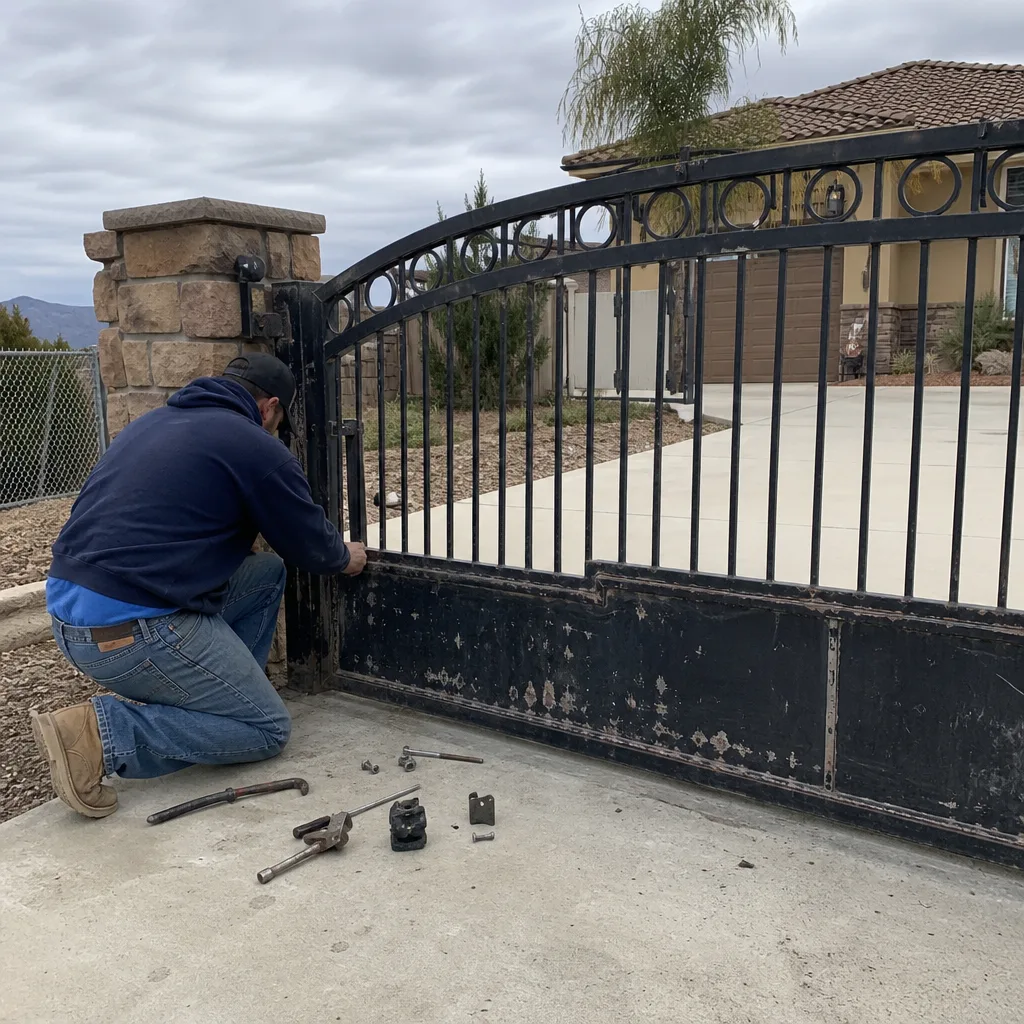 Before
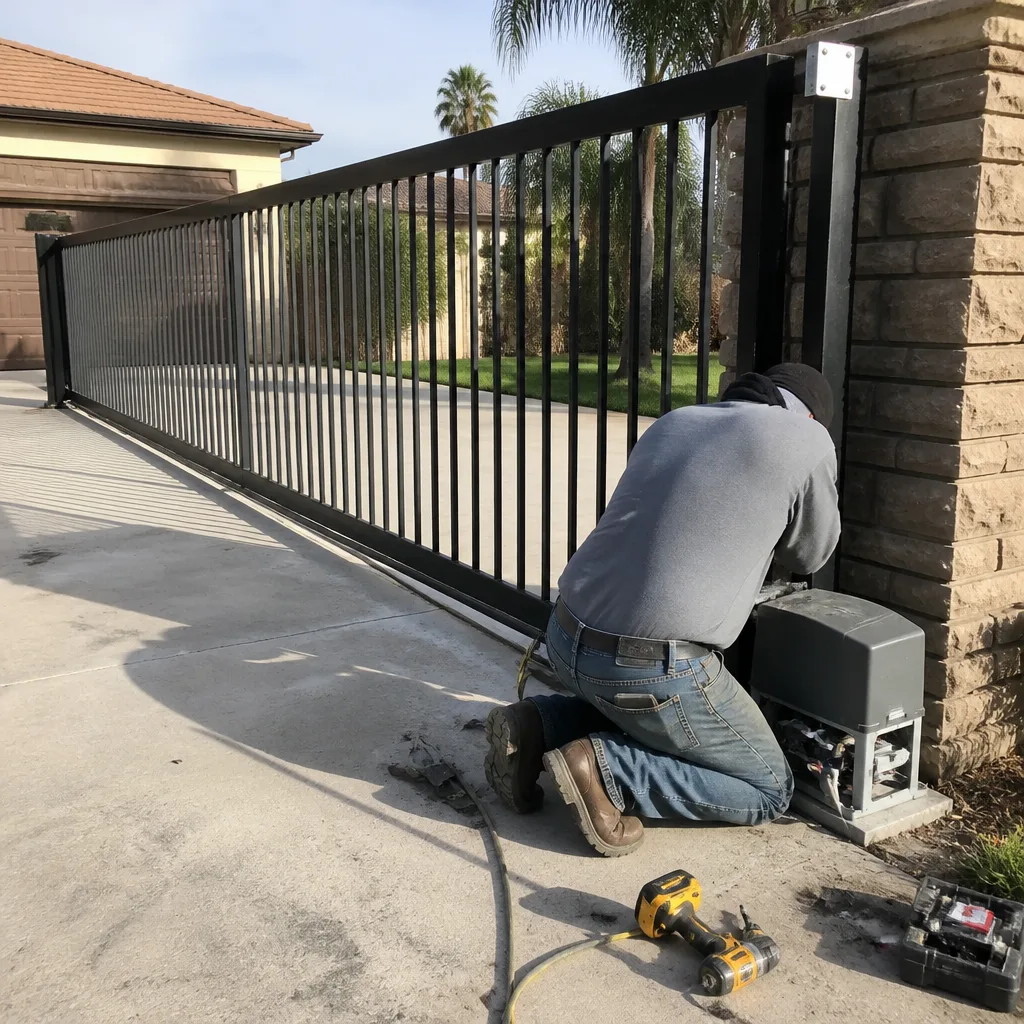 After
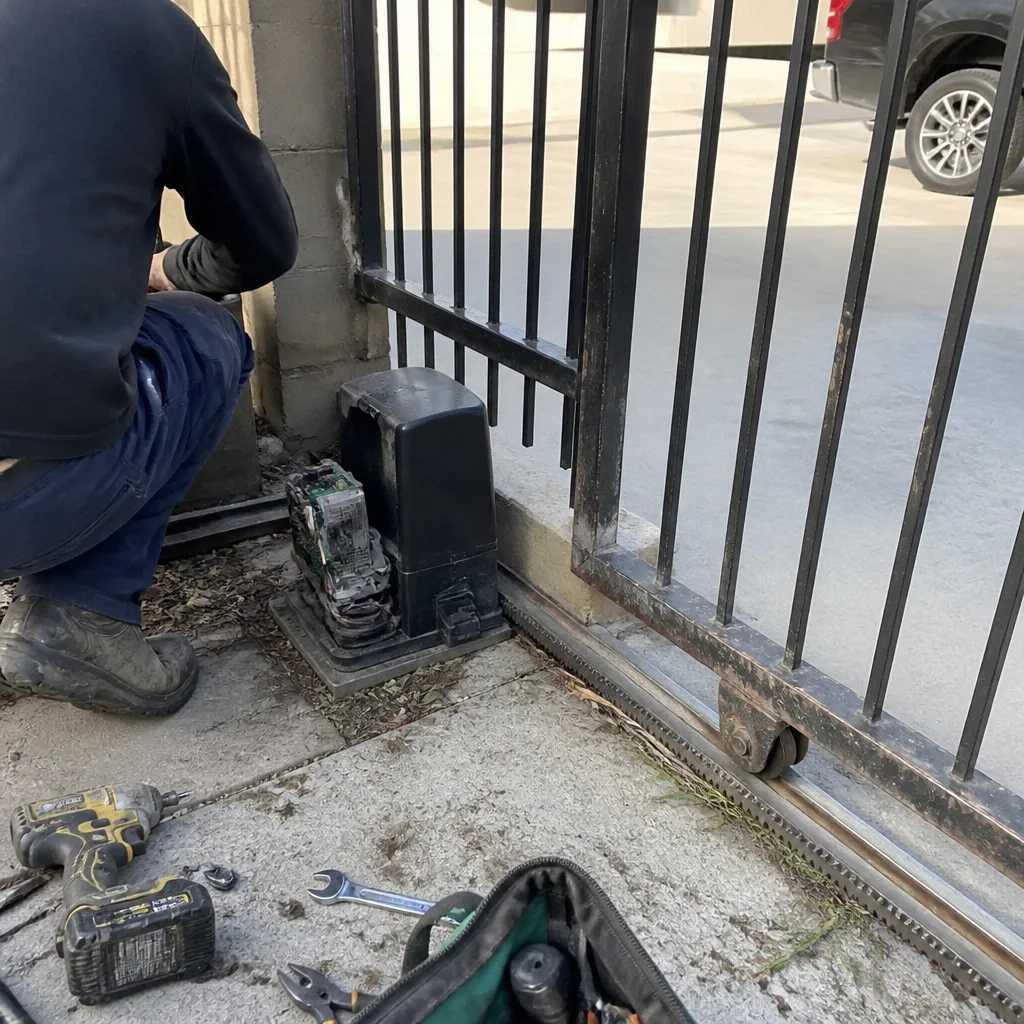 Before
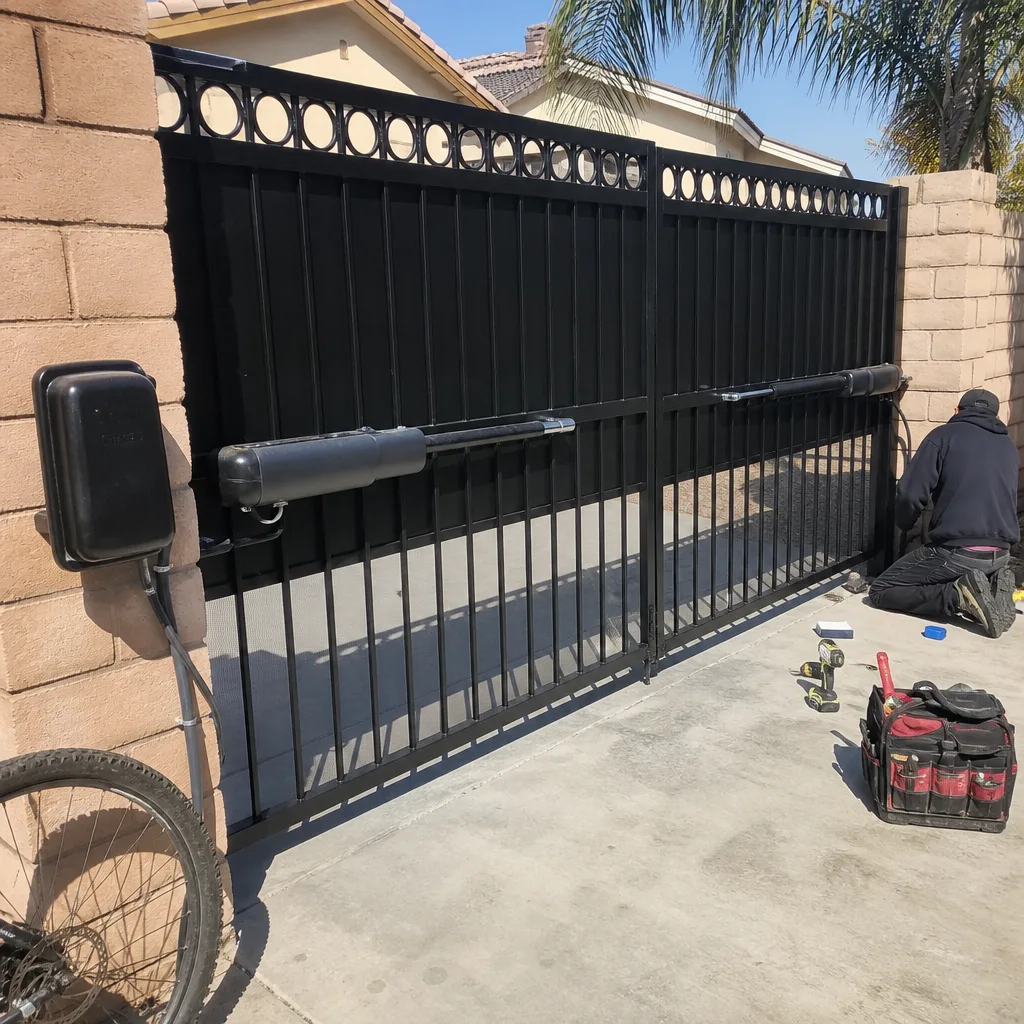 After
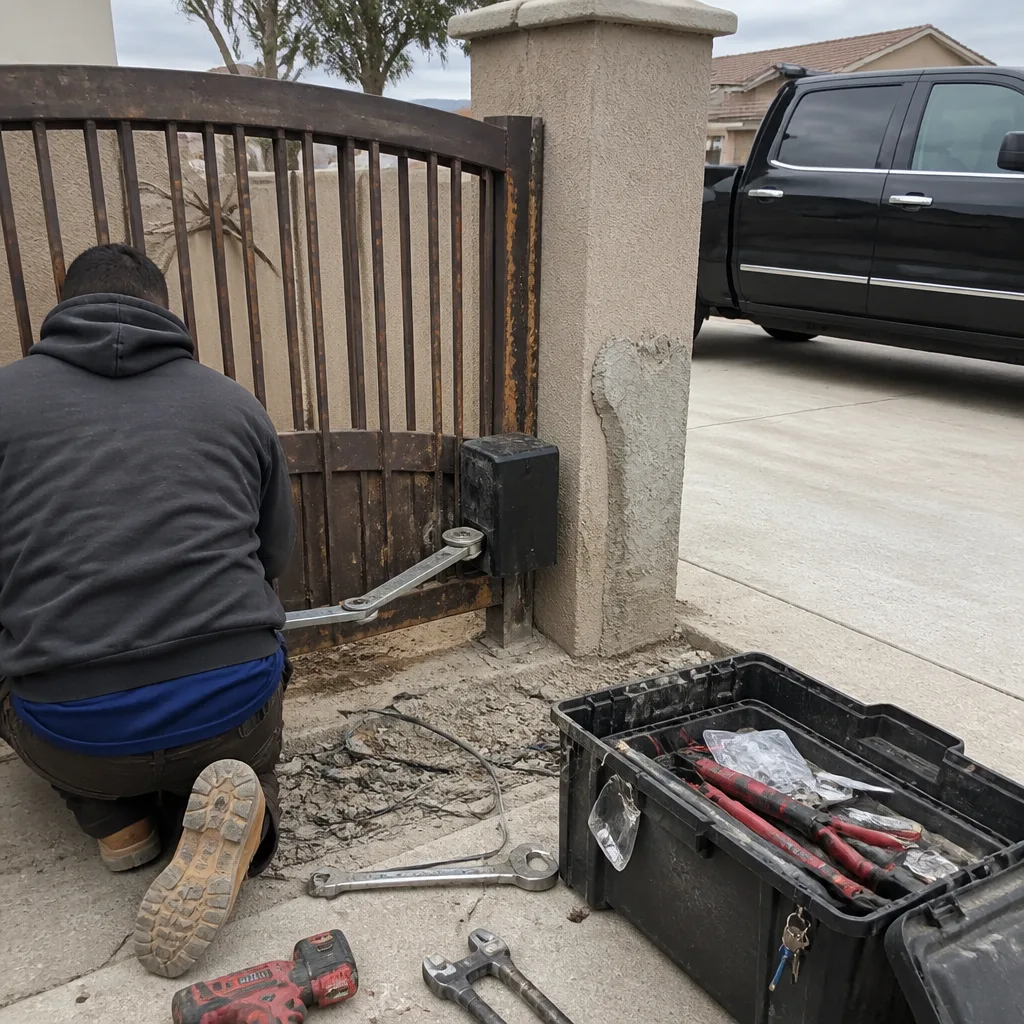 Before
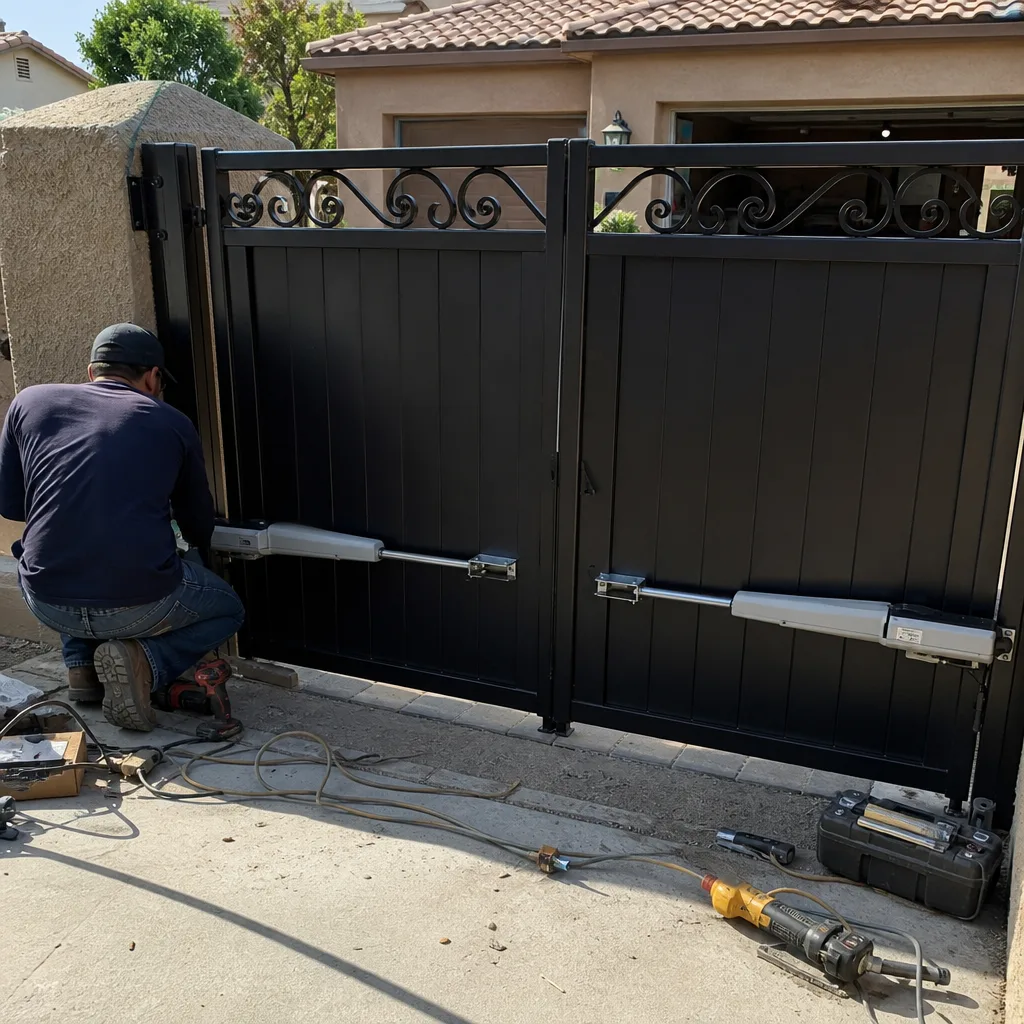 After