Last updated November 2, 2026
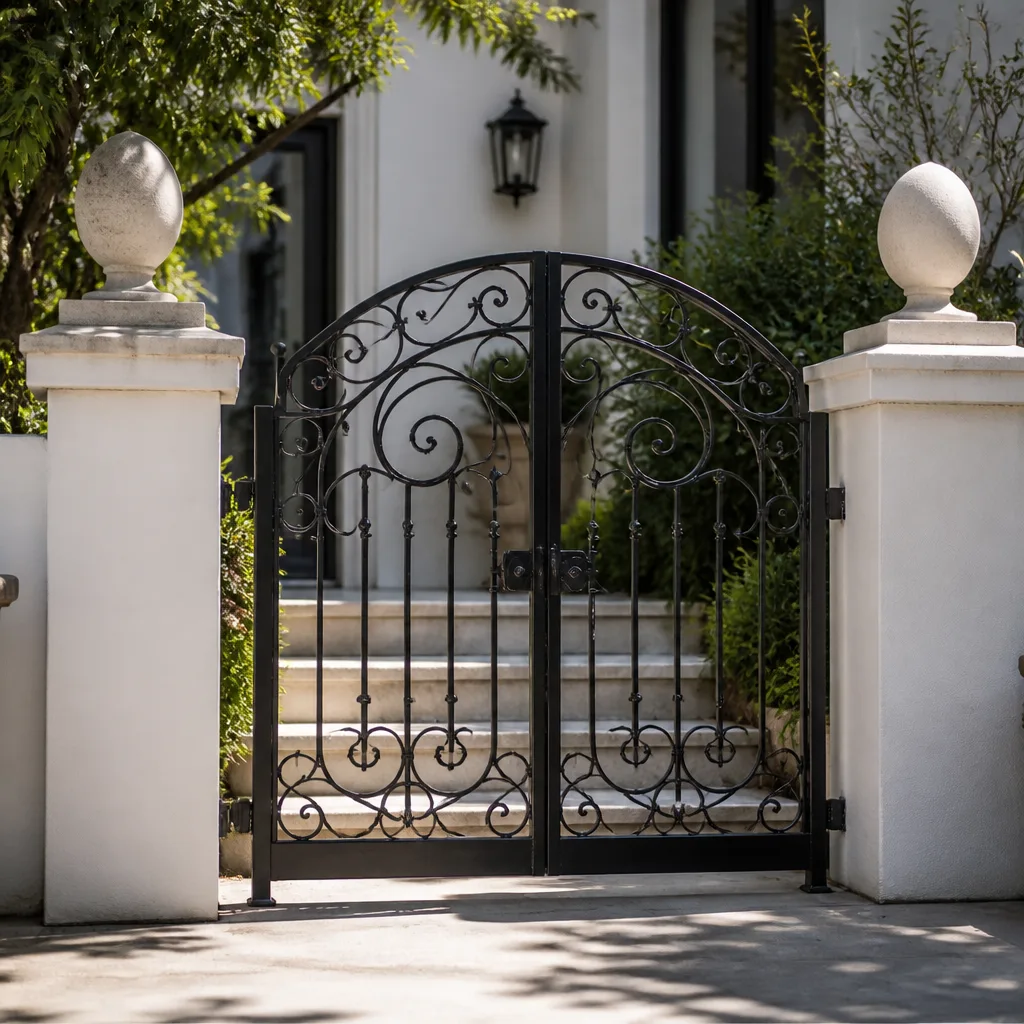 Wrought iron
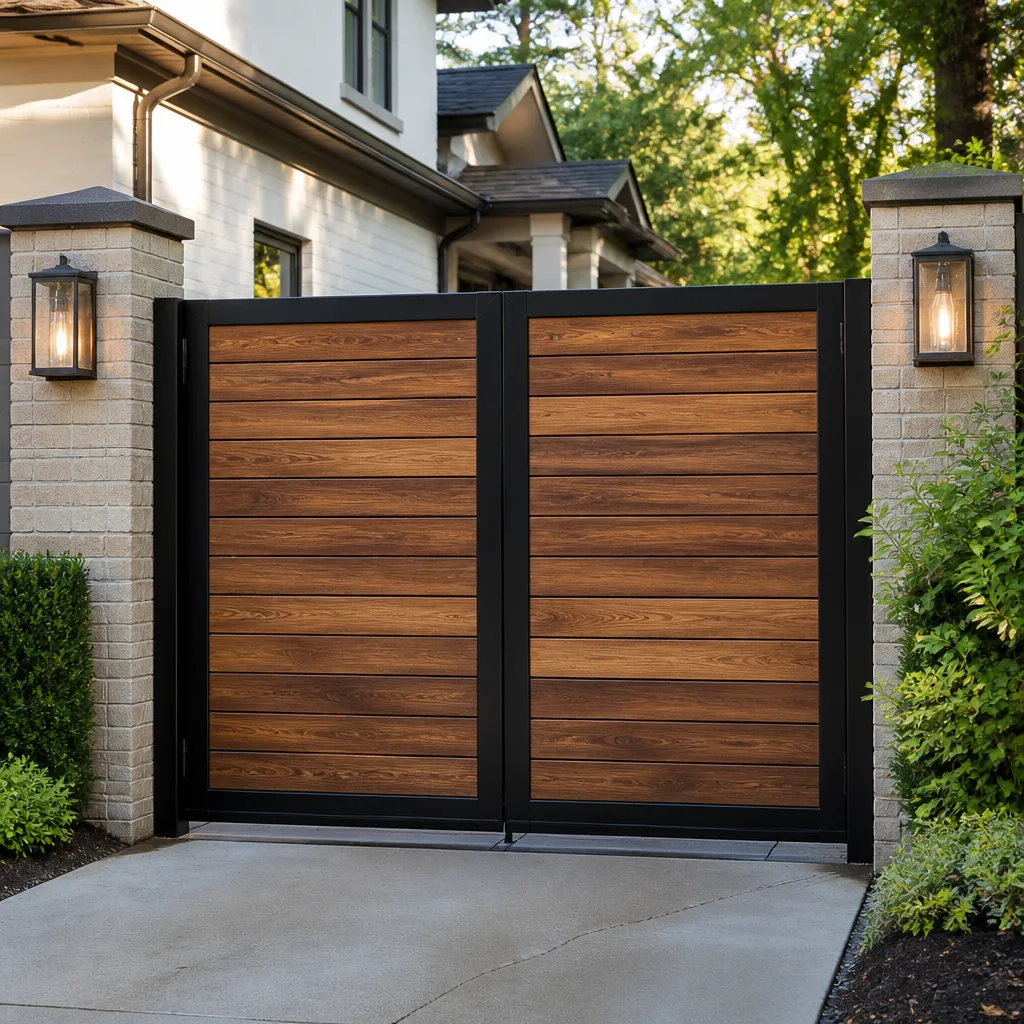 Wood & steel frame
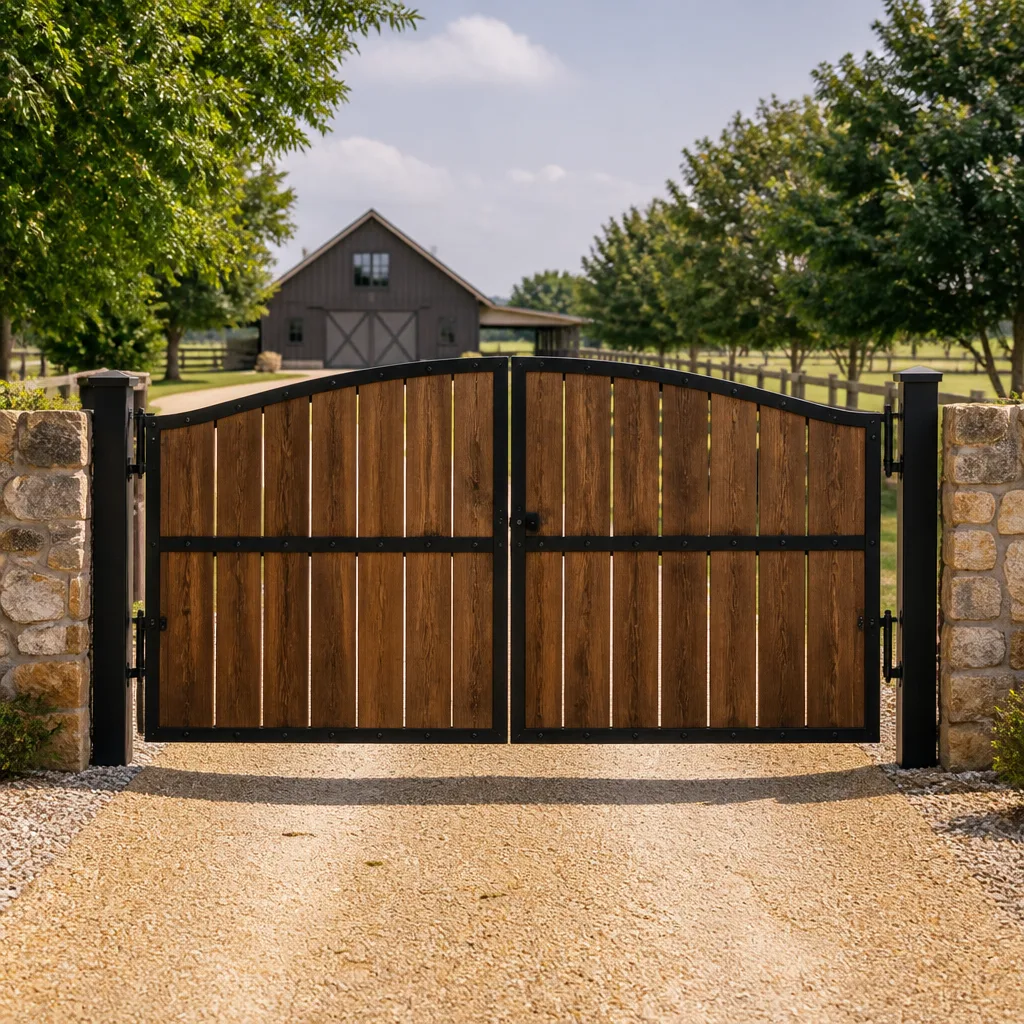 Farm & ranch
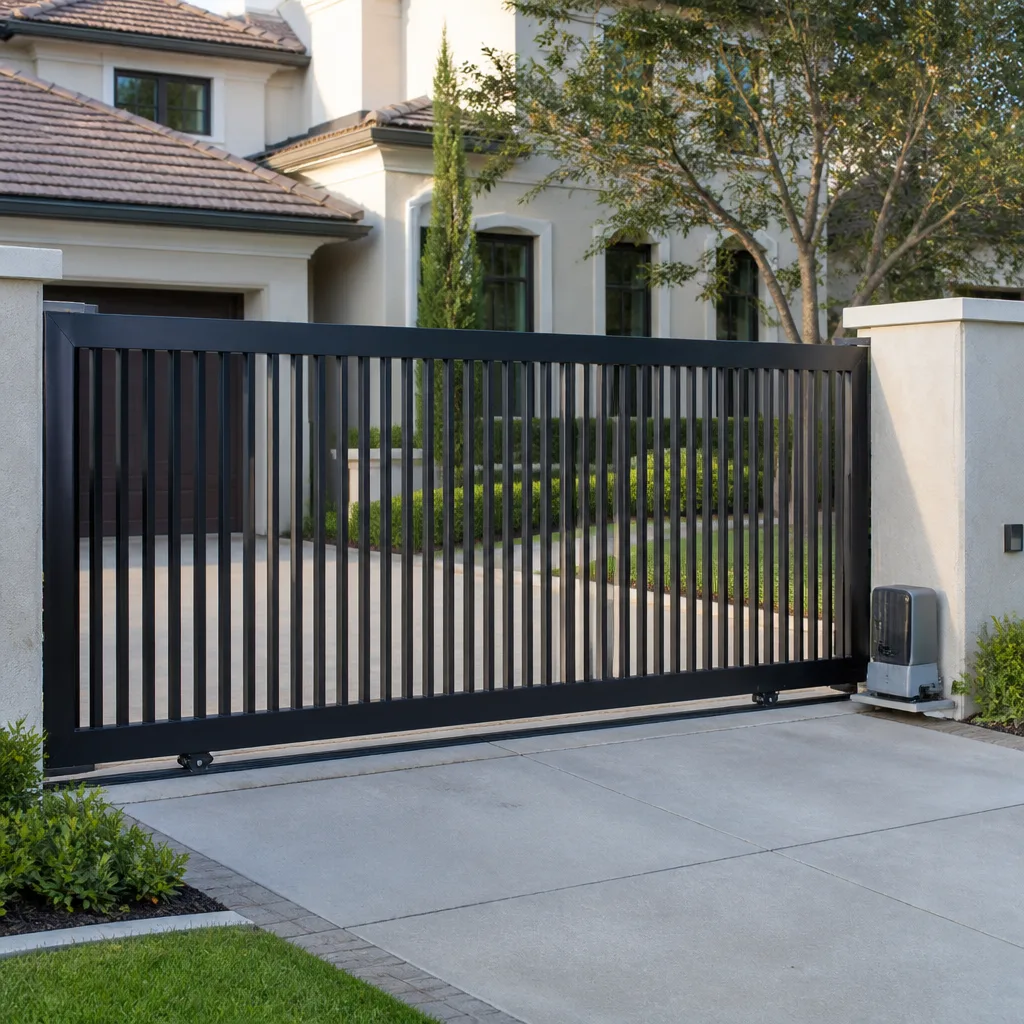 Sliding driveway gates
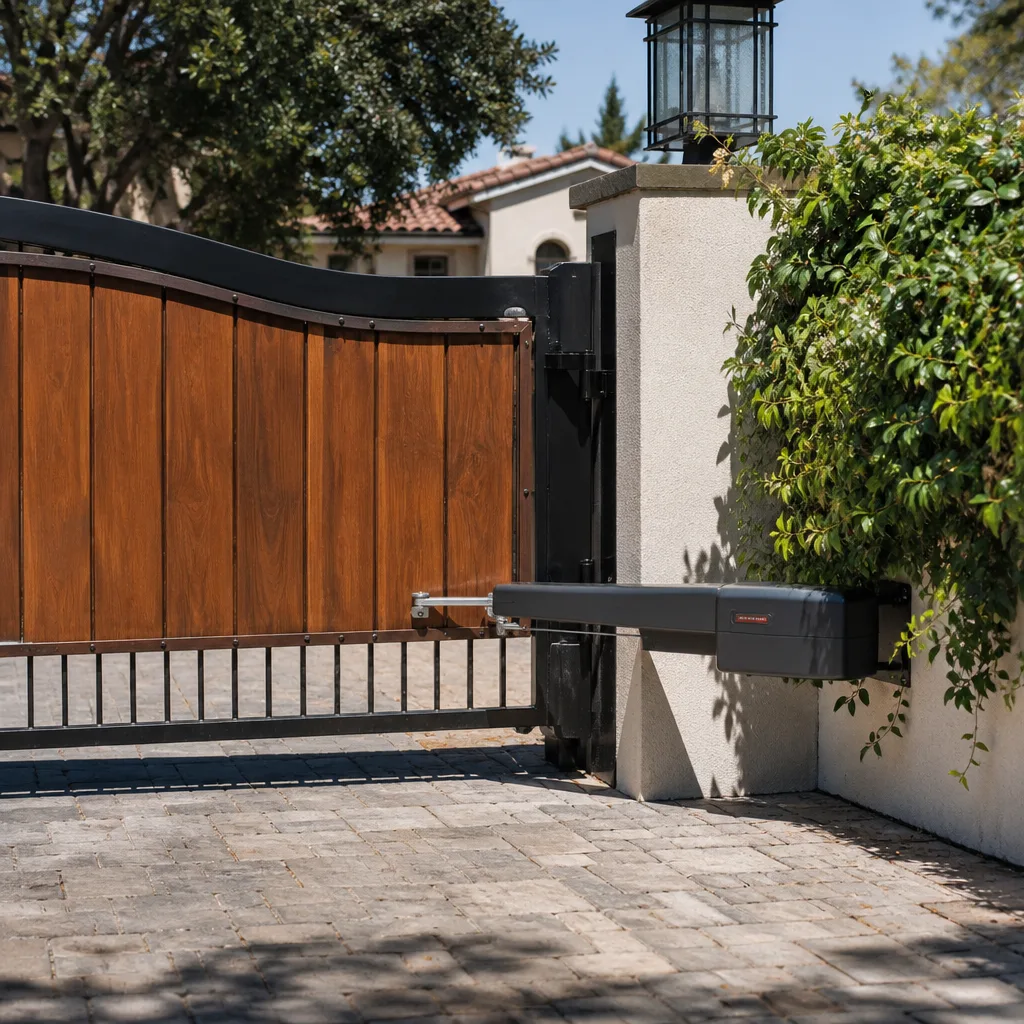 LiftMaster operators
Free on-site gate assessment - hinges, posts, and your LiftMaster or Nice gate operator checked before anything is quoted
The assessment is free and the quote is the invoice.
Get your free estimateGate Repair Permits, Codes & Inspections in CA: What You Need to Know
Here’s a number most California homeowners never hear until it’s too late: a stop-work order on a gate project can delay a home sale by six to eight weeks. Not because the work was unsafe, but because nobody pulled a permit that a buyer’s inspector flagged retroactively. In Menifee, we’ve watched this play out with automated gate operators more than any other single improvement on a property. This guide draws the exact line between gate work that’s exempt from permitting and gate work that isn’t, covering Riverside County code thresholds, UL 325 compliance, ASTM F2200 entrapment standards, HOA architectural review, and how unpermitted work surfaces during a California property disclosure.
Quick Answer
Most our Gate Repair services in Menifee and across California require no municipal permit at all. Like-for-like replacement of a gate operator, hinge repair, wheel replacement, and control board swaps are typically exempt. Permits become necessary when you install a new automated operator where none existed, add access control systems with new electrical runs, or modify the structural posts and footings that support the gate. HOA architectural review is a separate process from municipal permitting, and skipping either one can create liability that follows the property, not just the owner who did the work.
Styles & brands we work with
- Wrought iron
- Wood & steel frame
- Farm & ranch
- Sliding driveway gates
- LiftMaster operators
Table of Contents
- Like-for-Like Repairs vs. New Installations: Where the Permit Line Actually Sits
- Riverside County Permit Thresholds for Gate Work in Menifee
- UL 325 Compliance: The Electrical Standard Most Homeowners Never Hear About
- ASTM F2200 and Entrapment Protection: What Inspectors Actually Test
- HOA Architectural Review vs. Municipal Permitting: Two Separate Processes
- Unpermitted Gate Work and California Property Disclosures
- How to Remediate Unpermitted Gate Work Before a Sale
Like-for-Like Repairs vs. New Installations: Where the Permit Line Actually Sits
The California Building Code and the Riverside County amendments to it draw one decisive line: repairing or replacing existing equipment with substantially similar equipment is maintenance, not construction. That distinction matters more than the price of the job or the size of the gate. A $4,000 control board replacement on a commercial swing gate is typically permit-exempt if the replacement board serves the same function as the original. A $900 operator installation on a gate that never had automation before can trigger a permit requirement.
What Counts as Like-for-Like Replacement
Here’s the working definition we use on job sites across Menifee: like-for-like means the new component performs the same function, occupies roughly the same footprint, draws comparable electrical load, and does not alter how the gate moves or how it’s anchored. Examples include:
- Operator replacement: Swapping a failed LiftMaster operator for a new LiftMaster, Elite, or DoorKing unit with similar voltage and duty cycle. No permit needed in most Riverside County jurisdictions if the gate was already automated.
- Control board replacement: Replacing a burned-out control board on an existing FAAC or BFT operator. This is a component exchange, not a system change.
- Hinge and wheel repair: Replacing worn gate hinges, rollers, or v-track wheels on a sliding gate. Mechanical maintenance, no permit required.
- Photo eye and safety sensor replacement: Swapping a failed photo eye or loop detector on an automated gate. Safety equipment replacement is explicitly not new construction.
- Keypad and intercom swaps: Replacing an existing entry keypad with a newer model of the same type. No new electrical circuit, no permit.
What Counts as New Installation
The moment you change the gate’s fundamental character, you’ve crossed into new installation territory. That includes adding automation to a gate that was previously manual, changing the gate’s swing direction or slide path, adding a pedestrian gate where none existed, or installing a new access control system that requires a dedicated power circuit. These jobs require a permit because they introduce new electrical loads, new structural demands on posts and footings, or new safety obligations under California’s adoption of the International Building Code.
In our experience, the most common Menifee mistake is treating an operator upgrade as a like-for-like swap. Homeowners replace a residential-grade Mighty Mule with a commercial-grade DoorKing operator, assuming it’s the same category of work. But if the new operator draws more amperage or requires a different circuit rating, the Riverside County building inspector classifies it as new electrical work, and that means a permit.
Riverside County Permit Thresholds for Gate Work in Menifee
Menifee falls under Riverside County building jurisdiction, meaning gate work here is governed by the California Building Standards Code as amended by Riverside County’s local ordinances. The county follows the California Electrical Code for all motorized gate work and the California Building Code for structural gate components. Here’s what triggers a permit requirement in Menifee specifically:
- New electrical circuits. If installing an automated gate operator requires running a new branch circuit from a panel, the county requires an electrical permit. This is the most common permit trigger on gate automation jobs in Menifee, especially for gates set back from the house along long driveways in communities like Menifee Lakes or Audie Murphy Ranch.
- Structural post or footing modification. Replacing gate posts, pouring new concrete footings, or widening a gate opening requires a building permit. Riverside County treats gate posts as structural elements when the gate exceeds certain weight thresholds.
- New gate installation where none existed. Installing a new gate across a previously ungated driveway or entry point counts as new construction in the county’s classification. This applies even if the gate itself is a simple tube steel swing gate.
- Access control systems with dedicated power. A telephone entry system, card reader, or keypad that requires its own power supply or hardwired communication line triggers a low-voltage permit in most Riverside County scenarios.
- Modifications to fire access points. Any gate that controls access to a fire lane, fire department access road, or emergency vehicle turnaround carries additional permit review in Menifee. The Menifee Fire Marshal’s office reviews these applications.
What Never Requires a Permit
To be direct about it: replacing a failed operator motor, swapping a control board, repairing a broken hinge, adjusting gate travel limits, replacing a photo eye, changing a remote control, and rebalancing a gate leaf are all permit-exempt in Menifee. These are repairs, not construction. The county does not want a permit application for a $180 hinge repair, and the code reflects that. What the county does want is a record of new systems being installed safely.
If you’re unsure whether your gate project falls into the exempt or permitted category, the Riverside County Building and Safety Department can answer scope questions directly. Our Gate Repair in Menifee service page also walks through common repair scenarios and what’s involved in each.
UL 325 Compliance: The Electrical Standard Most Homeowners Never Hear About
UL 325 is the safety standard that governs automated gate operators, and it’s the baseline every inspector checks when permitted gate work is reviewed. The standard exists because automated gates have killed and injured people, mostly children, when entrapment protection failed. Under UL 325, any automated gate operator installed after January 12, 2001 must include specific entrapment protection devices. If you’re installing a new operator on a gate in Menifee, the operator must carry a UL 325 listing, and the installation must include the protective devices the standard mandates.
Here’s why this matters for homeowners beyond the safety concern: if a gate with a non-compliant operator injures someone, the homeowner’s insurance carrier can deny the claim on the grounds that the equipment did not meet the recognized safety standard at the time of installation. Insurance adjusters do check this. In our service area, we see operators that were installed years ago with no photo eyes, no edge sensors, and no audible alarm. Those installations violate UL 325, and the liability sits with the property owner, not the original installer who may be long gone.
Minimum UL 325 Requirements for Residential Gates
- Type A entrapment protection: An inherent reversing mechanism in the operator that’s built into the motor. This is standard on every current LiftMaster, Elite, and DoorKing residential operator.
- Type B1 entrapment protection: A non-contact sensor, typically a photo eye, that detects an obstruction in the gate’s path and reverses the gate.
- Type B2 entrapment protection: A contact sensor, typically an edge sensor or safety edge, that reverses the gate when physical contact with an obstruction occurs.
- Audible alarm: A warning alarm that activates when the gate moves, required on all operators installed to UL 325 standards.
- Manual release: A mechanism that allows the gate to be operated manually during a power failure.
UL 325 compliance is not a permit requirement per se, but Riverside County inspectors will verify the operator carries the listing and that the entrapment protection devices are installed. For existing gates that were installed before 2001, the standard applies retroactively only when the operator is replaced. If your 1990s-era gate still has its original operator, you’re not obligated to upgrade. But if that operator fails and we replace it with a new LiftMaster or Elite unit, the new installation triggers full UL 325 compliance, including photo eyes and edge sensors where applicable.
ASTM F2200 and Entrapment Protection: What Inspectors Actually Test
ASTM F2200 is the construction standard for automated vehicular gates, and it works alongside UL 325 to define what a safe automated gate looks like. Where UL 325 covers the electrical and operator side, ASTM F2200 covers the physical gate structure itself: the gaps, clearances, and design features that prevent entrapment. When a Riverside County inspector reviews a permitted gate installation, ASTM F2200 compliance is what they’re checking with a tape measure.
Key ASTM F2200 Measurements Inspectors Check
- Gate-to-post gap: The gap between a moving gate leaf and the adjacent post or wall must be less than 2-1/4 inches or greater than 4 inches. Gaps in between create finger and limb entrapment hazards.
- Gate panel openings: Any openings in the gate panel itself must not allow a sphere of 2-1/4 inches to pass through when the gate is in any position. This prevents small children from getting their heads or limbs through decorative gate openings.
- Bottom clearance: The gap under a moving gate leaf must be less than 2 inches or greater than 4 inches on pedestrian-accessible gates. This prevents toe entrapment.
- Vertical gap protection: On vertical pivot gates, any gap between the gate and the ground or adjacent structure must not exceed 2-1/8 inches.
- Guard rails on rollers: Rolling gates must have guard rails or covers on exposed rollers and track wheels to prevent entanglement with clothing or body parts.
What does this mean for a typical Menifee homeowner? It means that the ornamental wrought-iron gate that’s been on the property for 20 years might not meet ASTM F2200 if it’s automated today. When we automate a manual gate or replace an operator on an existing automated gate, the installation is required to meet current standards, and that sometimes means retrofitting the gate itself with gap guards, roller covers, or panel infill. We see this regularly on older custom gates in Menifee’s established neighborhoods, where the gate was beautiful as a manual gate but doesn’t meet the clearance requirements once an operator is attached.
For electric gate automation work, the code compliance piece is central to what we do. You can read more about the full scope on our Electric Gate Repair in Menifee page.
HOA Architectural Review vs. Municipal Permitting: Two Separate Processes
Menifee is a city of master-planned communities, and that means most properties here sit inside at least one homeowners association. Audie Murphy Ranch, Menifee Lakes, Heritage Lake, The Heights, and most other Menifee communities have architectural guidelines that govern gate appearance, height, material, and color. Here’s the crucial distinction homeowners miss: HOA architectural approval and Riverside County building permits are entirely separate processes, governed by different authorities, and one does not satisfy the other.
An HOA can approve a new gate design and still leave you needing a county permit. A county permit can be issued for gate work that violates HOA guidelines, and the HOA can force you to modify or remove the gate at your own expense. The processes are not coordinated, and neither authority checks with the other.
What HOAs Typically Regulate on Gates
- Gate design and material: Most Menifee HOAs require gates match a specific architectural style, typically the community’s approved palette. Iron, aluminum, and tube steel specifications are common.
- Gate height: Many Menifee HOAs cap gate height at 6 feet, matching fence height limits. Driveway gates that exceed this require variance review.
- Color and finish: Powder coat colors are often specified. Black, bronze, and dark brown are the most common approved finishes in Menifee HOAs.
- Automation equipment: Some HOAs require operators to be discreetly mounted, with no exposed conduit or conduit boxes visible from the street.
- Operational hours: A few HOAs in Menifee restrict automated gate operating hours for noise reasons, particularly on swing gates with audible alarms.
What the County Regulates
Riverside County cares about safety, electrical compliance, and structural integrity. The county does not care what color your gate is or whether it matches the neighbor’s fence. It cares whether the operator carries a UL 325 listing, whether the electrical circuit is properly rated, and whether the gate posts are engineered for the weight and wind load the gate will carry. That’s the entire county scope.
The Sequence That Works
- Check HOA guidelines first. Pull your community’s architectural guidelines before you buy equipment or hire a contractor. If the HOA requires a specific gate style, you need that constraint before any engineering or purchasing happens.
- Submit HOA architectural review if required. Most Menifee HOAs require written approval before installation of a new gate or major gate modification. Allow 2 to 4 weeks for review.
- Apply for county permits if required. Once HOA approval is in hand, submit the county permit application for any work that triggers the thresholds discussed earlier.
- Schedule inspections. The county will require at least one inspection on permitted gate work, typically after the operator is mounted and wired but before final landscaping concealment.
Skipping step one is the most expensive mistake we see. We’ve been called to replace gates in Menifee that were installed beautifully, with permits, inspected by the county, fully code compliant, and then ordered removed by the HOA because the gate didn’t match the community guidelines. The permit never would have caught that issue. The HOA process would have.
Unpermitted Gate Work and California Property Disclosures
California Civil Code Section 1102 requires sellers to disclose material facts about a property, and that includes unpermitted work. The disclosure isn’t limited to what the seller knows; it extends to what the seller reasonably should have known. If you installed an automated gate operator without a permit and the work should have been permitted, failing to disclose it is a material omission in a California real estate transaction. That creates liability that survives the sale.
Here’s how unpermitted gate work surfaces, based on what we’ve seen in Menifee transactions:
How Unpermitted Gate Work Gets Discovered
- Home inspector flags it. A competent home inspector checks the gate operator for a UL 325 listing, looks for permit stickers on the electrical panel, and compares the gate’s automation to the county’s permit records for the property. Inconsistencies get written up.
- HOA resale review catches it. When a Menifee property is sold, the HOA typically performs a resale inspection to verify the property complies with architectural guidelines. A gate that was installed without HOA approval fails this review.
- Buyer’s lender requests permit history. FHA and VA loans in particular require documentation that improvements are permitted. Unpermitted gate work can stall or kill a loan.
- Title company or appraiser flags it. Unpermitted improvements can reduce appraised value, and a thorough appraiser will note the gate’s automation and check for permits.
The Riverside County homeowner in our opening example faced a stop-work order and retroactive inspection because their HOA flagged the unpermitted operator during a sale two years after installation, a scenario covered in our Gate Repair Warning Signs: A Menifee Homeowner’s Reference Guide. The repair to get the work permitted cost more than the original operator installation, and the sale was delayed by seven weeks. That’s the real cost of skipping a permit: not the permit fee, which is modest, but the downstream liability and transaction delays.
The same principle applies to gate installation projects. If you’re putting in a new automated gate system, getting the permits right the first time protects the property’s resale value. We cover the full installation scope on our Gate Installation in Menifee page.
How to Remediate Unpermitted Gate Work Before a Sale
If you own a Menifee property with unpermitted gate work, the remediation path is clear and usually faster than homeowners fear. Here’s the sequence we recommend:
- Determine the scope of non-compliance. Was the gate work permit-exempt after all? If it was a like-for-like operator replacement, you may have no issue at all. If a permit was genuinely required, document what was installed and when.
- Pull the records. Contact Riverside County Building and Safety to see what permits exist for the property. If none were pulled for the gate, you’re starting from zero, which is fine.
- Apply for a retroactive permit. Riverside County issues permits for existing work through an “as-built” process. The work gets inspected as it currently exists, not as it was installed. If it meets code, the permit is issued and the inspection is cleared.
- Fix any non-compliant items. If the operator lacks UL 325 entrapment protection, the gate gaps don’t meet ASTM F2200, or the electrical circuit is undersized, these items must be corrected before the retrofit inspection passes.
- Clear the HOA review. If the gate was never approved by the HOA, submit a retroactive architectural review. Most Menifee HOAs have a process for this, though it may include a fee and possible modification requirements.
- Document everything. Keep the permit, the inspection sign-off, and the HOA approval letter. These documents go in the disclosure package when you sell.
The total cost of a retroactive permit and code-compliance retrofit on a typical Menifee automated gate ranges from a few hundred dollars for a simple operator that’s already compliant to several thousand dollars if the gate requires physical modification to meet ASTM F2200 clearances. Either way, it’s cheaper than a failed sale or a liability claim.
Common Mistakes to Avoid
- Assuming “repair” always means “no permit.” Like-for-like repairs are exempt, but upgrades that change the operator class, add new electrical circuits, or modify the gate structure are not. The word “repair” on an invoice doesn’t change the county’s classification.
- Treating HOA approval as a substitute for a permit. These are two separate authorities with zero coordination. Both need to be satisfied independently on any Menifee gate project that involves visible changes or new automation.
- Relying on the original installer to have pulled permits. Unlicensed or under-scoped contractors often skip permits on gate automation work because the homeowner never asks. The liability remains with the property owner regardless of who did the work.
- Installing a residential-grade operator on a commercial-use gate. A Mighty Mule operator on a gate that cycles 50 times a day will fail early, and when it does, the replacement triggers code compliance on the entire installation. This is a false economy we see regularly.
- Ignoring ASTM F2200 gap requirements on ornamental gates. A decorative iron gate that’s beautiful as a manual gate often has gaps that violate entrapment standards once automated. Getting the gate evaluated for automation before investing in an operator avoids retrofits later.
- Failing to disclose unpermitted work during a sale. California’s disclosure requirements don’t have a “the buyer didn’t ask” exception. Material omission of unpermitted gate work creates liability that follows you after closing.
- Skipping the permit because “it’s just a gate.” The permit fee for gate work is modest relative to the project cost, and the inspection process catches safety issues before they become liability issues. The permit isn’t a tax; it’s a safety verification that protects you.
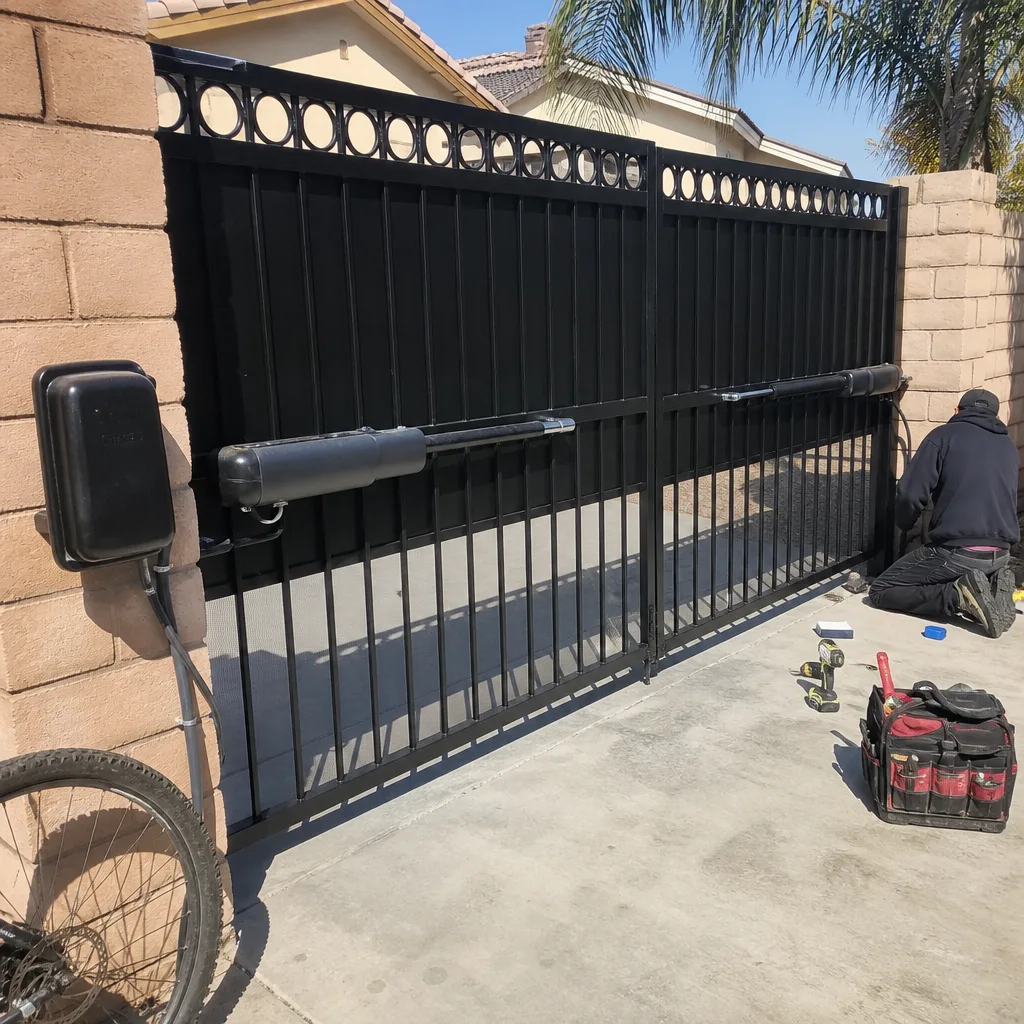
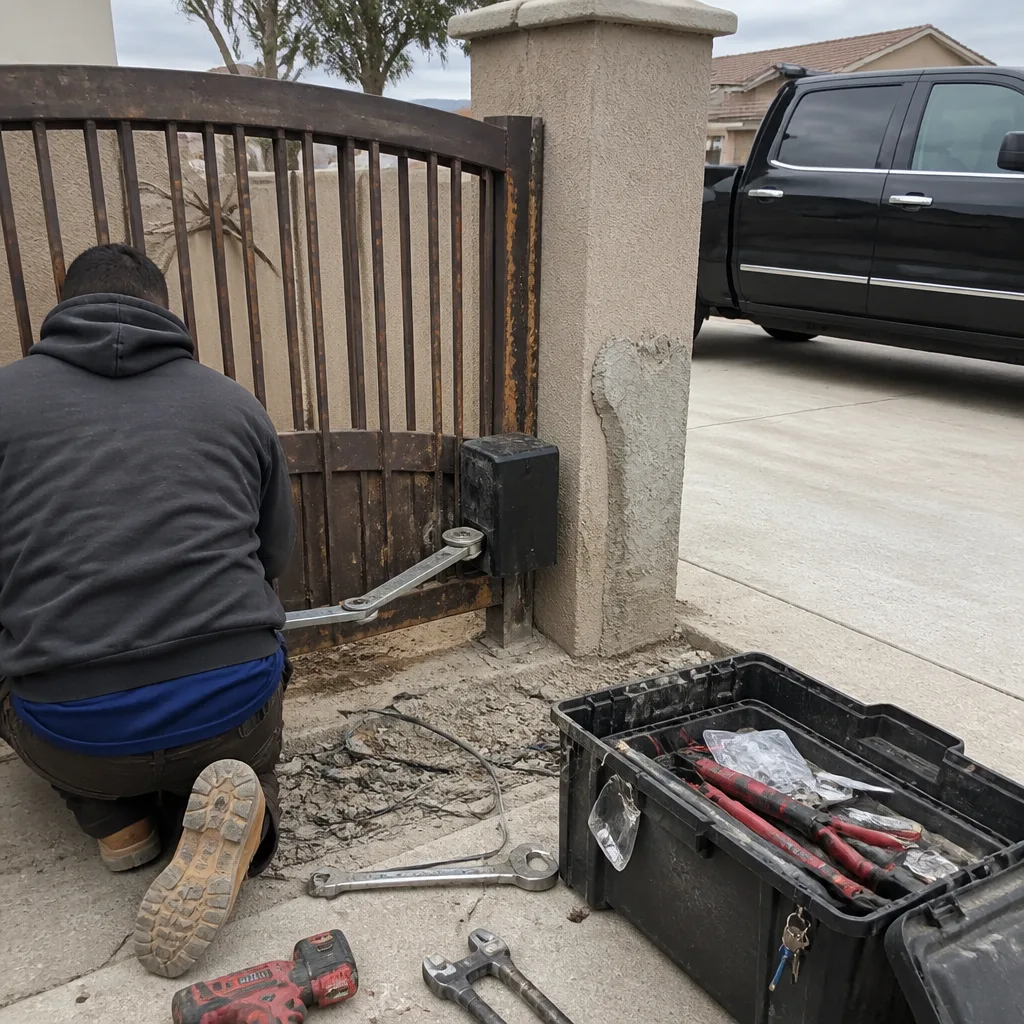
See the difference
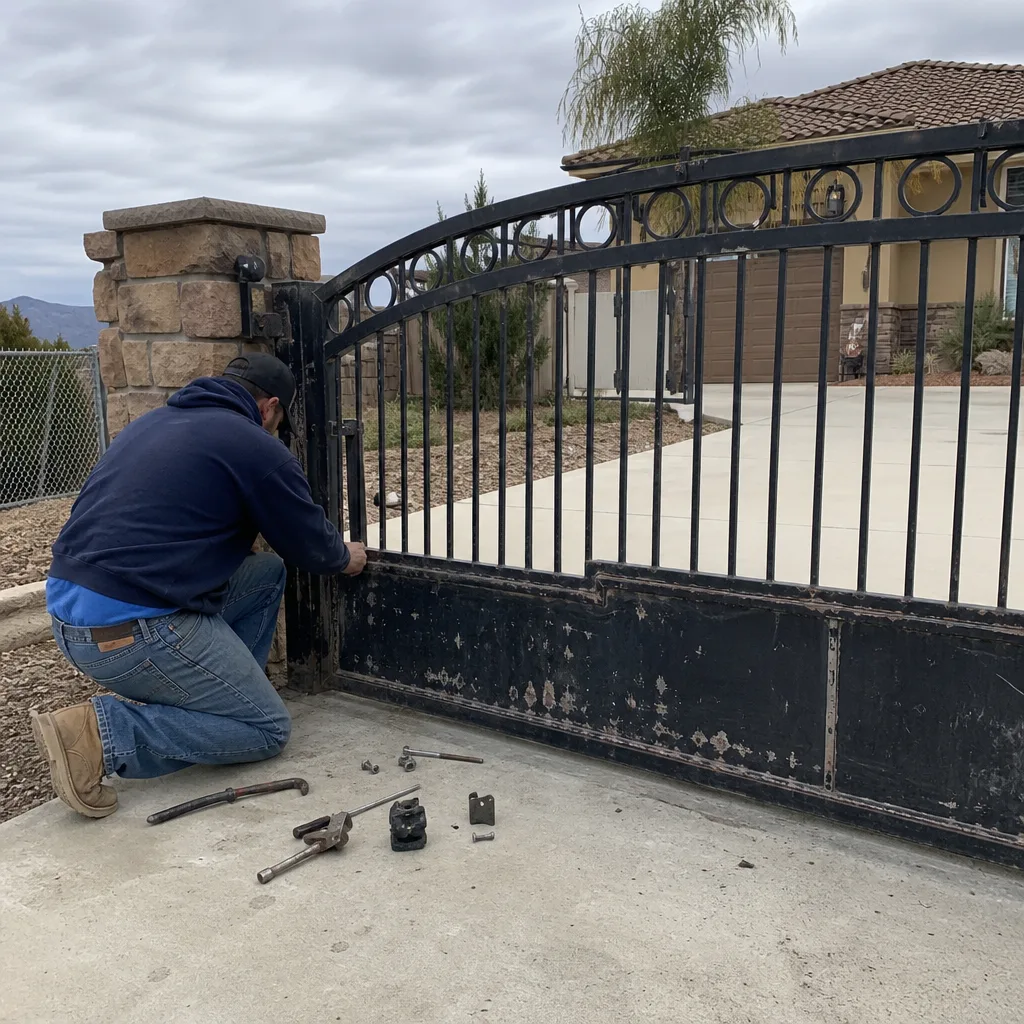 Before
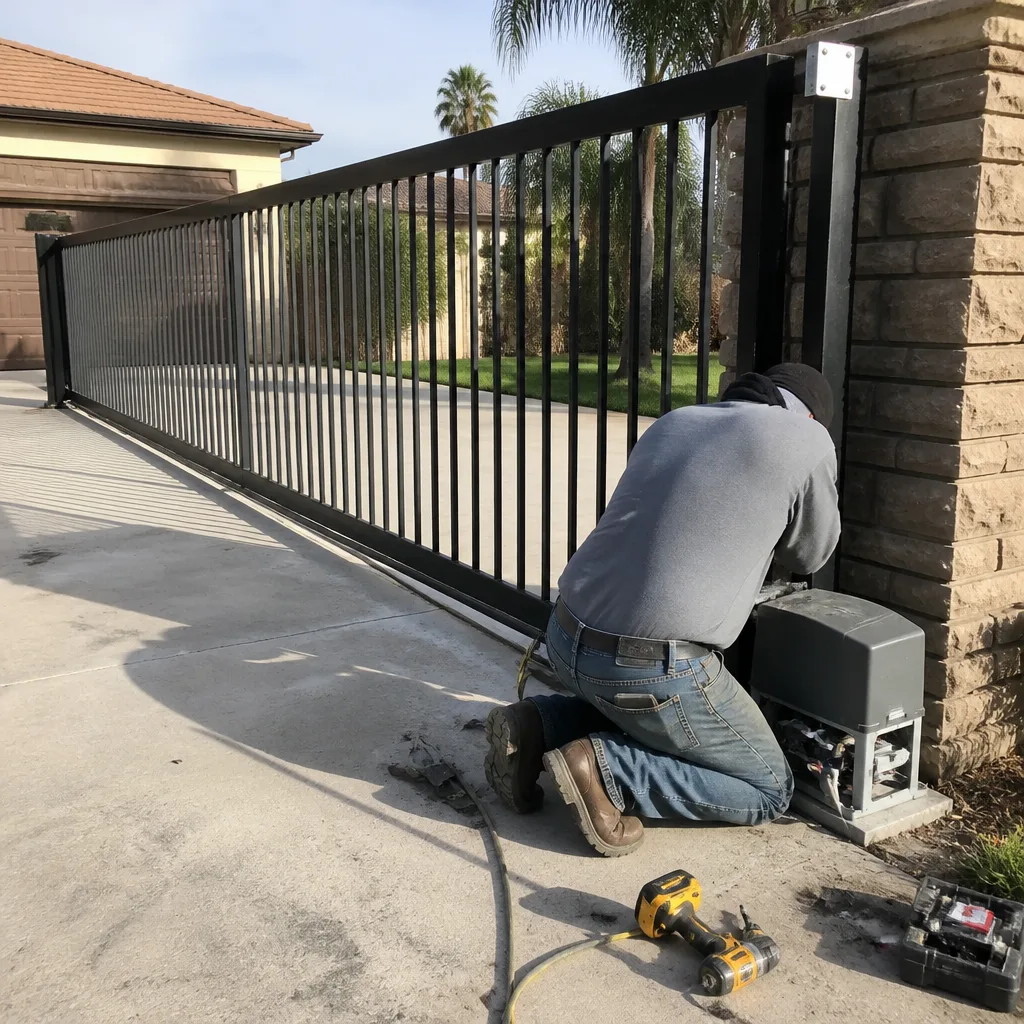 After
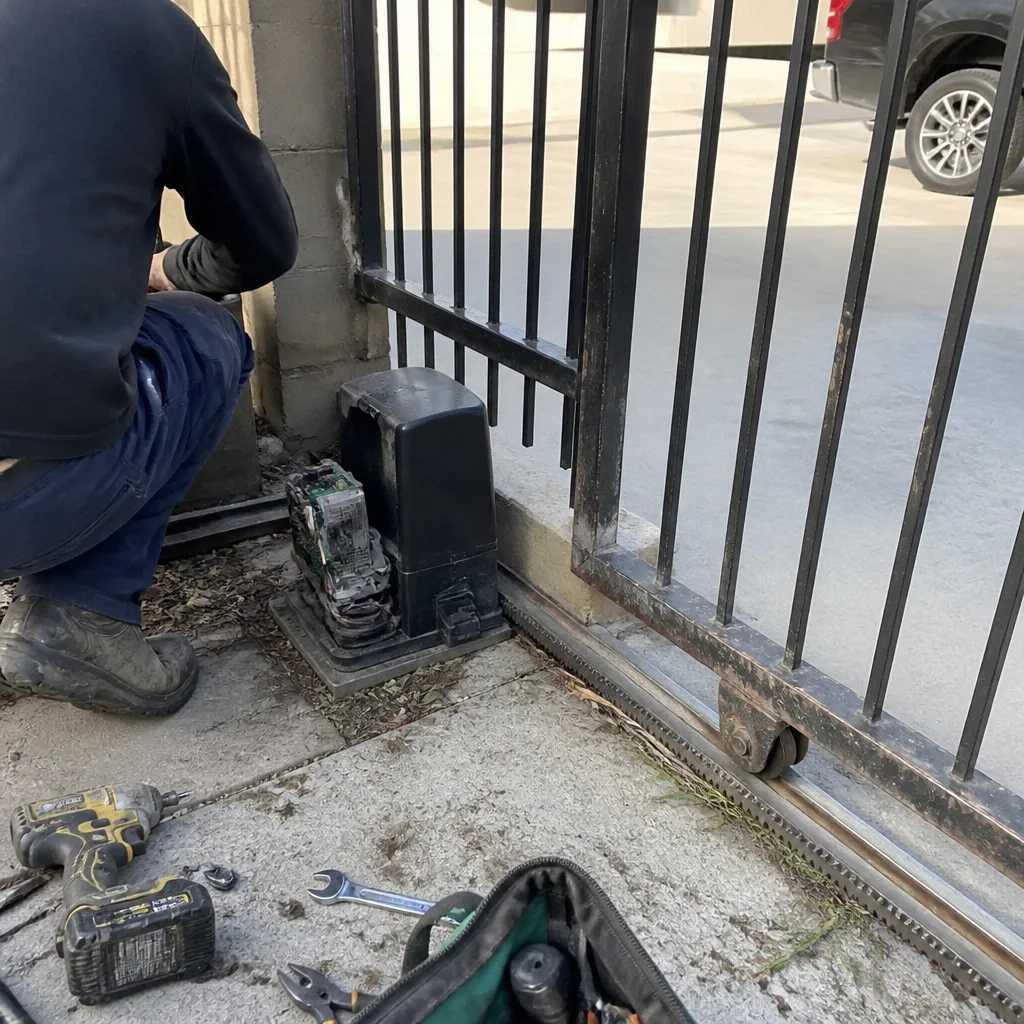 Before
 After
 Before
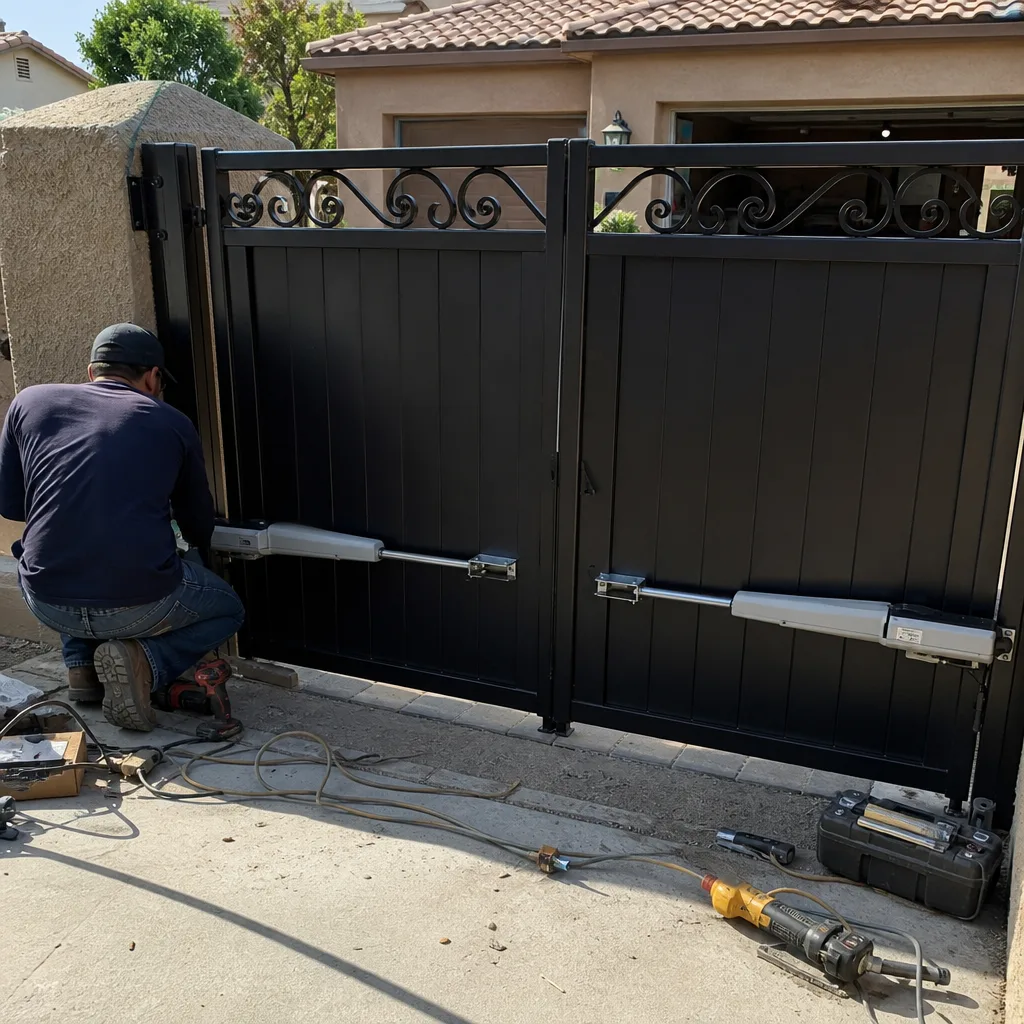 After
When to Call a Professional
If you’re replacing an automated gate operator in Menifee and you’re unsure whether the work is like-for-like or triggers a permit, that’s a question worth answering correctly before the work starts. The same applies when you’re automating a manual gate, adding access control, or modifying gate posts and footings. A gate specialist who does this work daily in Riverside County knows the local code thresholds, the UL 325 and ASTM F2200 requirements, and what the Menifee inspectors check on a gate-specific inspection. Gate Repair Menifee offers free estimates in Menifee and can scope your project against the actual Riverside County code requirements before you commit to anything. Call (877) 752-2577 and we’ll walk you through what your specific gate project requires.
Frequently Asked Questions
No, if you’re replacing an existing automated operator with a substantially similar unit. A like-for-like operator swap on a gate that’s already automated is classified as maintenance in Riverside County and requires no permit. A permit is needed when you’re adding automation to a gate that was previously manual, changing the operator to a higher-amperage commercial class unit, or installing new electrical circuits. Call (877) 752-2577 if you’re unsure which category your job falls into.
UL 325 is the safety standard for automated gate operators, requiring entrapment protection devices like photo eyes and reversing mechanisms. Any new operator installed on a California gate must carry a UL 325 listing, and the installation must include the required protective devices. Compliance matters for safety and for insurance: a non-compliant gate operator can give your insurer grounds to deny a claim if someone is injured by the gate.
Gate permit fees in Riverside County vary by project scope and valuation. An electrical permit for a new operator circuit typically runs in the low hundreds of dollars, while a building permit for structural gate work costs more. The exact fee depends on the project’s declared valuation. What costs more than the permit itself is the retrofit inspection if unpermitted work is caught later, plus the potential transaction delays during a property sale.
Not for most repairs. HOA architectural review in Menifee communities applies to new gates, visible gate modifications, and changes to the gate’s appearance. Routine repairs like operator replacement, hinge repair, and control board swaps are typically exempt from HOA review because they don’t change the gate’s exterior appearance. The HOA review is separate from any county permit, and neither process substitutes for the other.
Unpermitted gate work that should have been permitted must be disclosed in a California property sale, and failing to do so creates post-sale liability. Buyers, lenders, and HOAs all have processes that catch unpermitted work before closing. The fix is a retroactive permit through Riverside County’s as-built inspection process, which can usually be completed in weeks if the work meets current code.
Yes. Any automated gate installed in California is required to meet ASTM F2200 construction standards, which govern entrapment clearances on gate panels, posts, and rollers. Inspectors verify these clearances during permitted gate installations, and existing gates being automated may need retrofit gap guards or roller covers to comply. This is a code compliance issue, not a stylistic choice.
The Bottom Line
California’s gate permitting rules aren’t as complicated as they seem once you understand the core distinction: repairs and like-for-like replacements are exempt, while new automation, new electrical, and structural changes require permits. HOA review is a separate process that runs parallel to county permitting, and both matter in Menifee’s master-planned communities. UL 325 and ASTM F2200 aren’t optional; they’re the safety standards that protect you from liability and failed inspections. And unpermitted work has a way of surfacing at the worst possible moment: a sale. Get the permits right the first time, or remediate before you list, and your gate will be an asset to the property rather than a disclosure liability. For additional help, see our more guides & resources.
Written by the team at Gate Repair Menifee.