Last updated November 3, 2026
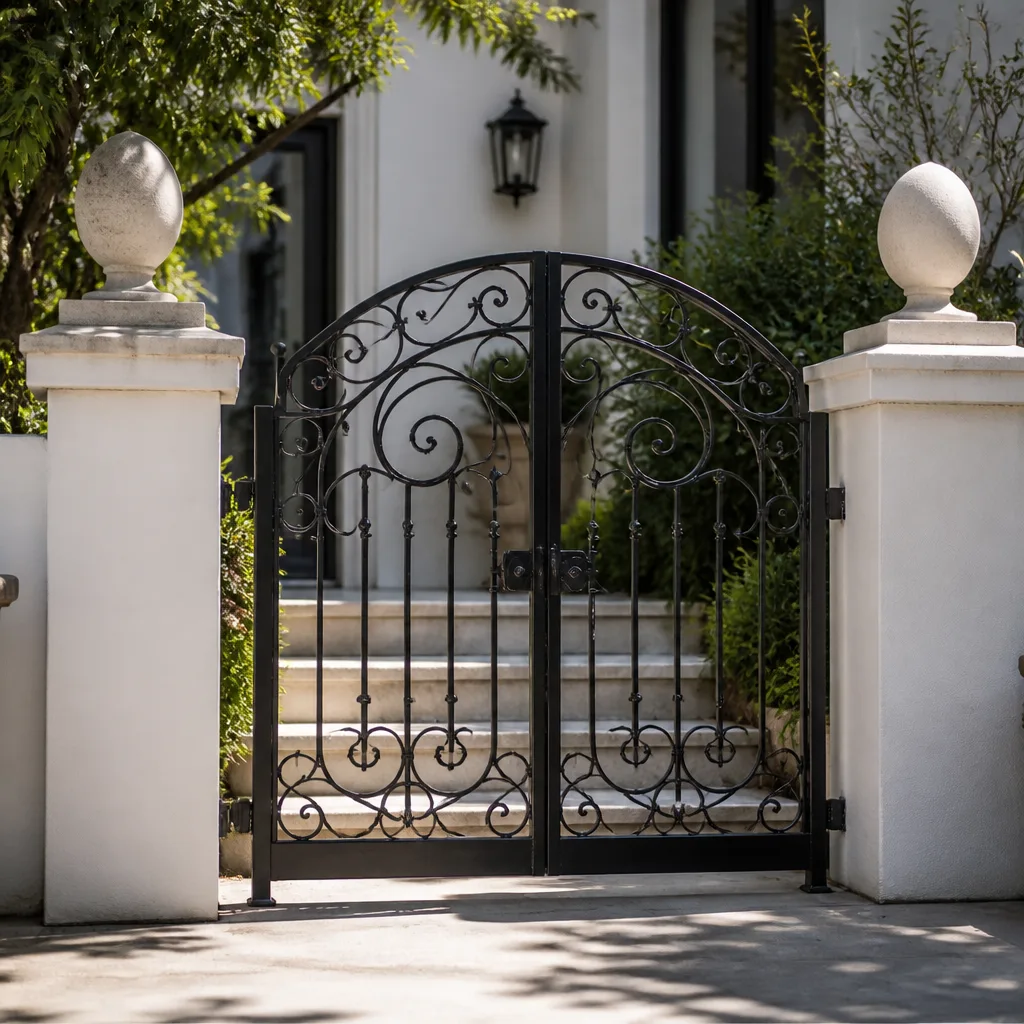 Wrought iron
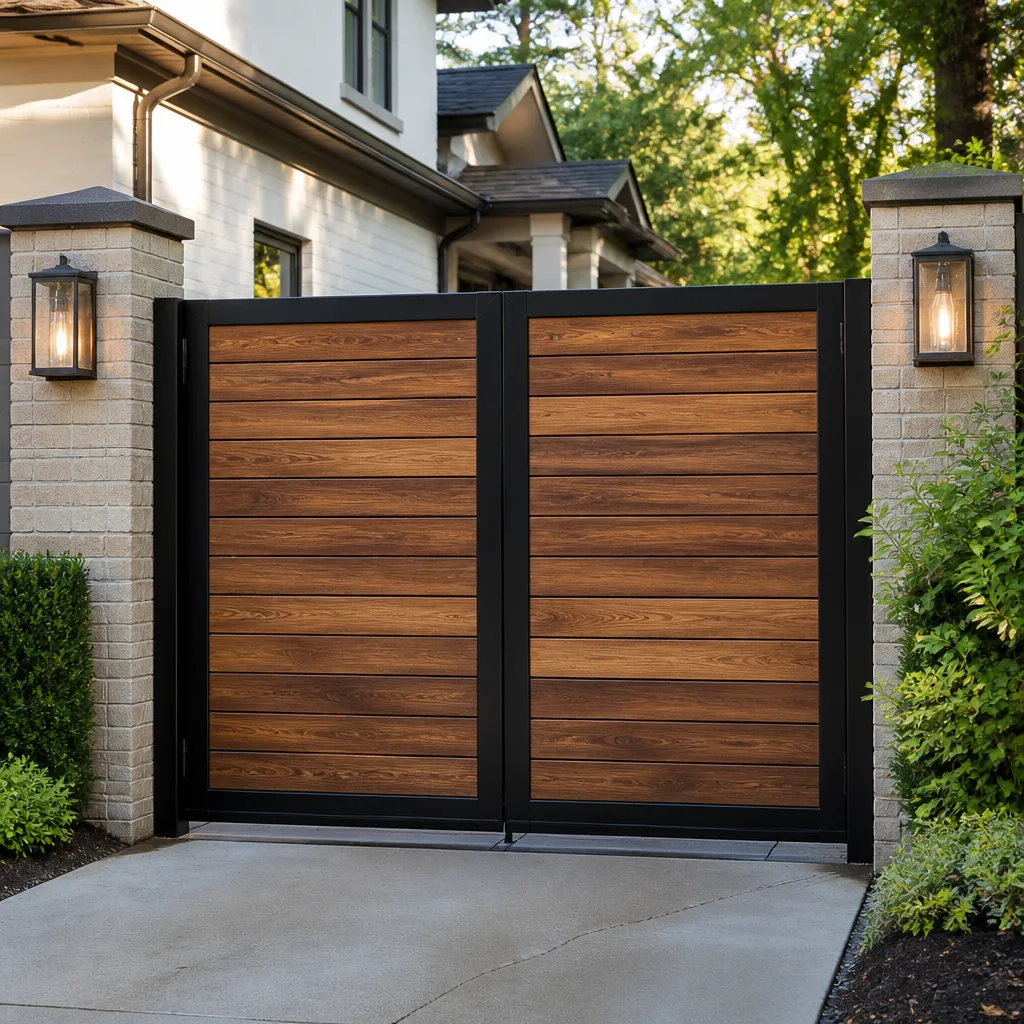 Wood & steel frame
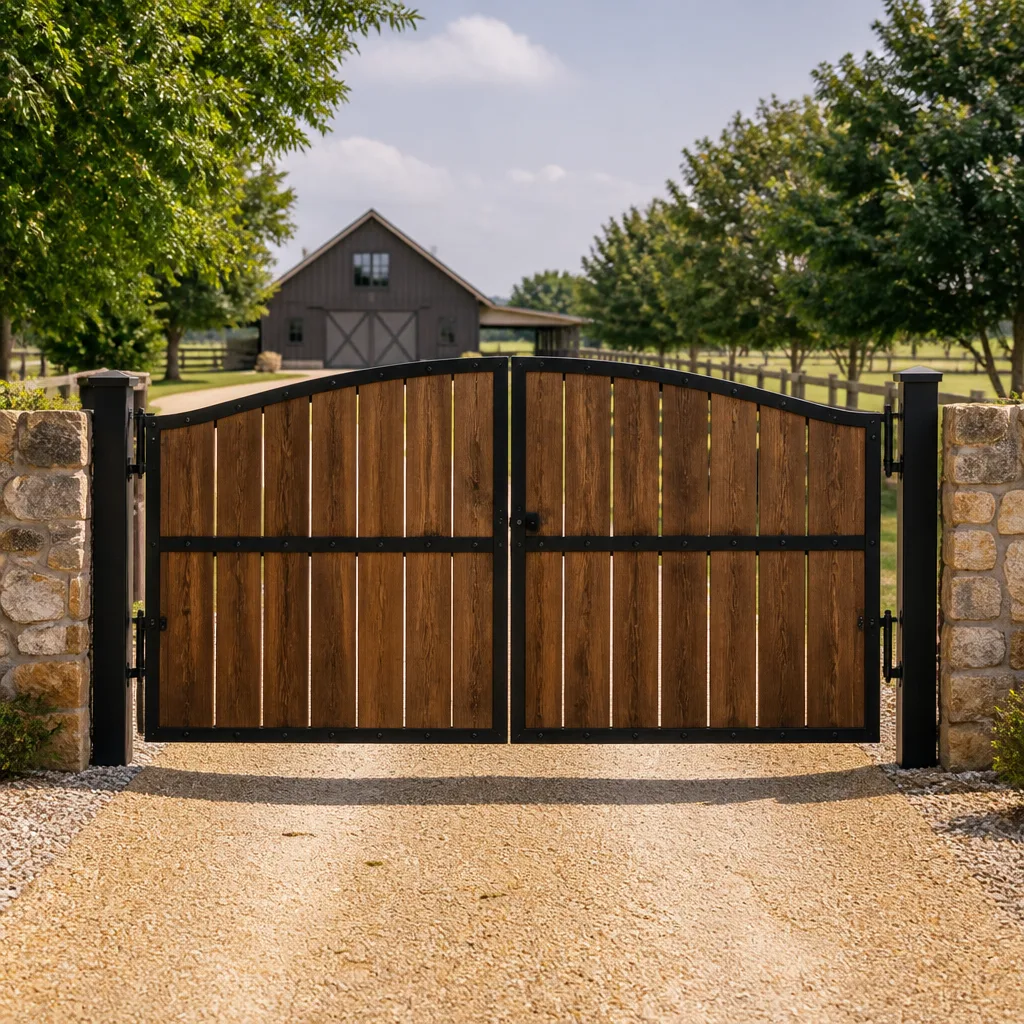 Farm & ranch
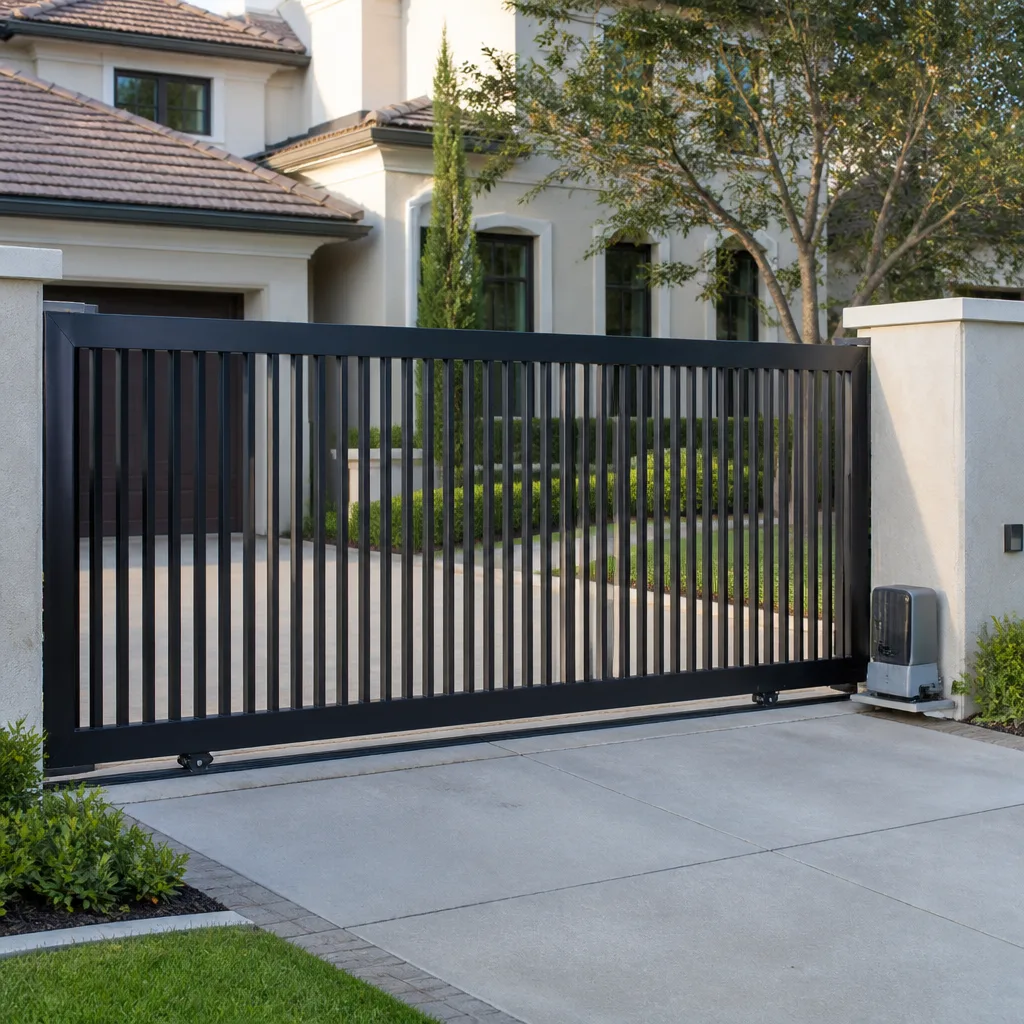 Sliding driveway gates
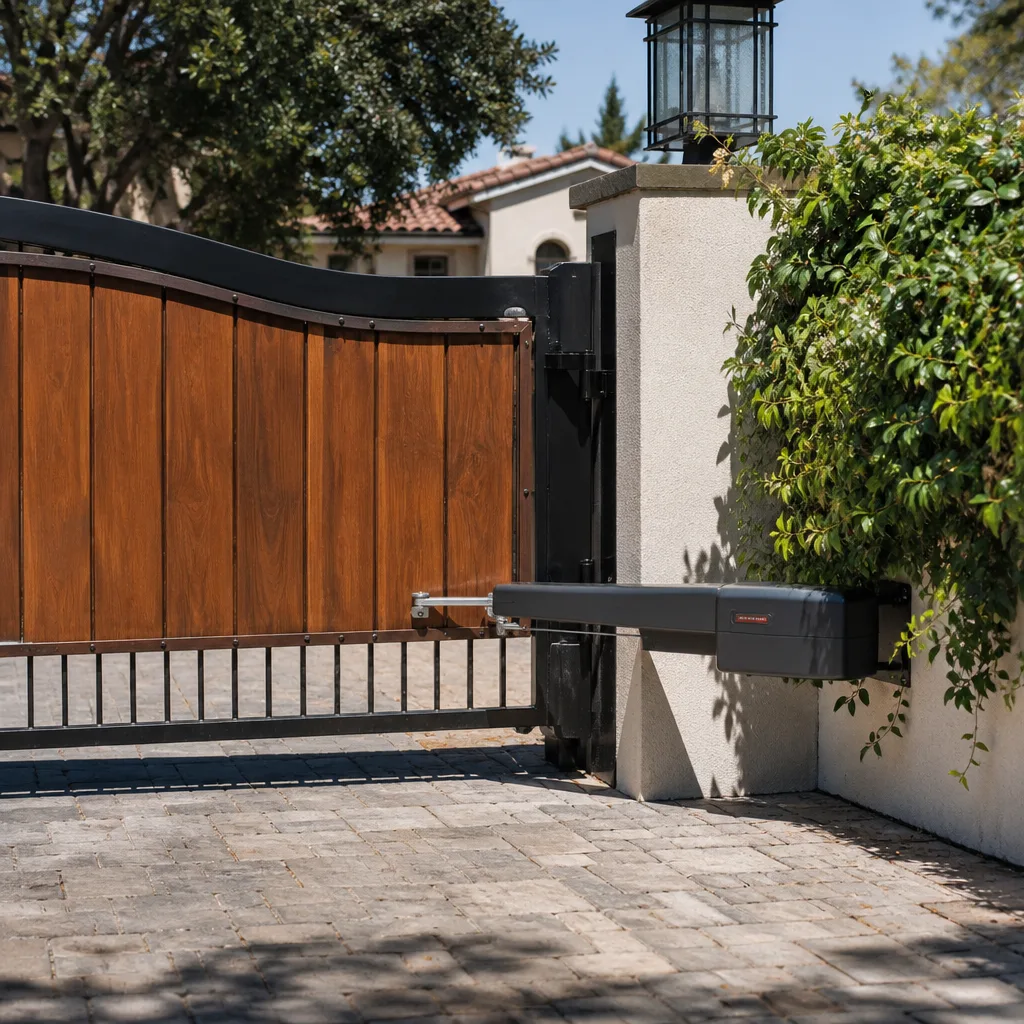 LiftMaster operators
Free on-site gate assessment - hinges, posts, and your LiftMaster or Nice gate operator checked before anything is quoted
The assessment is free and the quote is the invoice.
Get your free estimateThe Complete Gate Repair Guide for Menifee Homeowners
Most gate failures in Menifee’s 92585 and 92584 zip codes trace back to the same root cause: thermal expansion stress that accumulated silently through three summers before anything visibly broke. The gate didn’t suddenly fail last Tuesday. It’s been failing since the summer of 2023, when 100°F-plus heat cycles began micro-fracturing the welds and stressing the operator mounts. Our Complete Guide to Gate Repair in Menifee maps that failure sequence. You’ll learn how Menifee’s clay soil moves posts, why your operator brand matters more here than in coastal cities, what actually breaks first, and what a repair should cost before you call someone.
Quick Answer
Gate repair in Menifee typically costs between $165 and $580 depending on whether you’re dealing with a misaligned gate on sagging posts, a failed operator board, or a broken safety edge. Most repairs we see are diagnosed in one visit and completed same-day or next-day once parts arrive. The key is matching the repair to the actual failure, not the symptom, because in Menifee’s heat and clay the symptom is usually downstream of the real problem.
Styles & brands we work with
- Wrought iron
- Wood & steel frame
- Farm & ranch
- Sliding driveway gates
- LiftMaster operators
Table of Contents
- Why Gates Fail in Menifee: The Failure Sequence
- Clay Soil and Post Heave: The 18-24 Month Gate Killer
- Inland Heat vs. Your Gate Operator: Hydraulic and Electromechanical
- HOA Gate Systems: What Menifee’s Shared-Access Communities Face
- Component Lifespans in Menifee Conditions
- Repair vs. Replace: The Cost Threshold Decision
- Common Mistakes to Avoid
- When to Call a Professional
- Frequently Asked Questions
Why Gates Fail in Menifee: The Failure Sequence
In our experience, Menifee gates don’t die randomly. They follow a sequence. Here’s how it usually goes, based on the service calls we run across Heritage Lake, Audie Murphy Ranch, and the older lots off Bradley Road.
- Summer thermal cycling stresses the steel. Menifee sees sustained 95°F to 105°F afternoons from June through September. The gate leaf expands in the heat and contracts at night. Over two or three summers, that cycling fatigues weld points, particularly where the gate frame meets hinge plates and where the operator arm bolts to the gate. Homeowners rarely notice this stage because nothing looks broken.
- Clay soil shifts the posts. Menifee sits on expansive clay. It swells when winter rains penetrate and shrinks during dry summer months. That movement slowly alters the post alignment. You won’t see a crooked post, but you will see a gate that starts scraping the latch or dragging on the drive wheels.
- The operator compensates until it can’t. The motor or hydraulic unit keeps pushing against worsening misalignment. This overworks limit switches, wears the gear teeth, and eventually trips the thermal overload or strips a drive gear. By the time you hear grinding or the gate refuses to close, the operator has been fighting the soil movement for months.
- A visible failure occurs. This is the symptom you finally notice: a gate stuck halfway, a keypad that won’t open, a gate that reverses immediately, or a hinge that tears loose from the post. The “sudden” failure is the end of a long chain.
Knowing this sequence changes how you budget. Regular post-drift checks and hinge lubrication are not upkeep chores. They’re early detection. If you catch stage two, you spend $120 on post shimming instead of $480 on an operator repair two summers later. Our Gate Repair in Menifee work is built around diagnosing where you are in this sequence, not just replacing whichever part finally quit.
Clay Soil and Post Heave: The 18-24 Month Gate Killer
Menifee’s soil is classified as expansive clay loam in most residential zones. Expansive means it changes volume with moisture content. Here’s what that does to a gate. When winter rain saturates the ground around a gate post, the clay swells and exerts lateral pressure on the concrete footing. When summer arrives and the soil dries, it shrinks away from the footing, leaving a small void. Over repeated wet-dry cycles, the post begins to lean or heave upward, often by a quarter-inch to a full inch over 18 to 24 months.
An inch doesn’t sound like much until you understand the geometry. A typical driveway gate leaf is 8 to 14 feet long. A one-inch vertical shift at the post translates to a 3 to 5 inch drop at the free end of the gate leaf. That’s the difference between a gate that clears the drive wheels and one that grinds into the concrete every cycle. If you have an electric operator, that extra friction loads the motor beyond its design spec. Operators that should run 10 to 12 years in a stable soil environment fail in 6 to 8 years in Menifee’s moving ground.
Here’s how to measure post drift before it becomes a repair bill:
- Place a 4-foot level vertically against the gate post, checking both the drive-side and hinge-side posts.
- If the bubble is more than one line off center in any direction, measure the gap at the top of the level against the post.
- Open the gate to the halfway point and check if the clearance between the gate bottom and the pavement is consistent. A change of more than one inch across the leaf means post movement.
- Check the hinge-to-post weld points for hairline cracks. These cracks are the first visible sign that post movement is pulling the hinge apart.
- If you see any of these signs, schedule a post-drift evaluation and ask about shim correction or epoxy re-anchoring before the operator takes damage.
This is the most overlooked gate issue in Menifee because it doesn’t look like a gate problem. It looks like a soil problem. But soil movement is the root cause behind more than half of the misalignment and operator failure calls we handle, which is why Gate Repair Menifee home inspection process starts with the posts, not the motor.
Inland Heat vs. Your Gate Operator: Hydraulic and Electromechanical
Menifee’s summer heat does two distinct things to gate operators, and the effect depends entirely on which type of system you have. This is where brand and spec matter. A gate operator that works perfectly in Temecula’s cooler microclimates or in San Diego’s coastal air may be under-spec’d for sustained Menifee heat.
Electromechanical Operators
Electromechanical operators, which include most Linear, Viking, and Ghost Controls residential units, use an AC or DC motor driving a gearbox. Heat affects them through thermal expansion of the circuit board and motor windings. When the board gets hot, solder connections expand and can micro-crack. When the motor runs hot, the winding insulation degrades faster. Menifee’s summer afternoons routinely push internal operator temperatures past 150°F if the unit sits in direct sun. That’s why we recommend that electromechanical operators in Menifee be spec’d with a minimum 30% torque reserve above the gate’s actual requirement. If your operator is running at 90% capacity on a cool day, it’s running at 110% on an August afternoon.
Hydraulic Operators
Hydraulic operators, common on heavier gates and some commercial Viking and BFT systems, respond better to sustained heat. The hydraulic fluid acts as a heat sink, and the pump motor is typically mounted in a ventilated enclosure. But heat thins hydraulic fluid. When the fluid viscosity drops, the operator loses pressure holding capability, which means a gate that stays put in spring can drift open or closed in August. The fix is usually a fluid viscosity check and possible replacement with a higher-temperature-rated hydraulic oil. Many operators ship with fluid rated for 80°F ambient, not the 105°F we see in Menifee.
The practical takeaway: if you’re installing or replacing an electric operator in Menifee, ask about the thermal spec. Some units simply are not built for inland heat. This is why Electric Gate Repair in Menifee starts with matching the operator type and brand to the climate reality, not just swapping like for like.
HOA Gate Systems: What Menifee’s Shared-Access Communities Face
Menifee has a high concentration of HOA-governed communities with shared-access gates. Heritage Lake, Audie Murphy Ranch, and several gated enclaves off Newport Road operate pedestrian gates and vehicle gates that see dozens to hundreds of cycles per day. That usage level changes everything about repair economics.
A residential single-family gate cycles maybe 8 to 12 times per day. A shared HOA vehicle gate in a 300-home community cycles 200 to 400 times daily. That’s the equivalent of 20 to 30 years of residential wear compressed into one year. Here’s what that means in practice:
- Operator duty cycle ratings matter more than homeowner reviews. An operator rated for residential use will not survive HOA traffic. The control board will overheat, the gearbox will strip, and the motor will fail, usually inside 18 to 24 months.
- Repair timelines are compressed by HOA liability. HOAs have an obligation to secure the community. A broken vehicle gate at an HOA entrance is a security exposure, not an inconvenience. That’s why many Menifee HOA boards keep repair response on a 24 to 48 hour expectation for controlled-access failures.
- Loop detector failures are more common than operator failures in HOA settings. The inductive loops buried in the pavement at HOA entrances see pavement movement from Menifee’s clay soil plus continuous vehicle traffic. When a loop cracks or shifts, the gate won’t detect a car approaching or, worse, won’t detect a car under the gate, creating a safety hazard.
- Keypad and telephone entry systems add a second failure point. Many Menifee HOAs use call boxes or RFID tag readers tied to the operator. When the operator is replaced but the entry system interface isn’t properly re-commissioned, the gate opens for the wrong codes or fails on visitor access.
If you’re an HOA property manager or board member in Menifee, the question isn’t whether the shared gate will fail. It’s whether you have the operator spec’d for the actual cycle count. We regularly find HOA gates running equipment that was never rated for the traffic it’s handling, which means boards pay for the same repair twice. A gate installer who understands the difference between residential and commercial-grade train sets the foundation for a repair cycle that’s measured in years, not months.
Component Lifespans in Menifee Conditions
Every gate component has a predictable lifespan under normal conditions. Menifee conditions are not normal. The combination of inland heat, clay soil movement, and, in HOA contexts, heavy cycling shortens or extends each lifespans in specific ways. Here’s what we tell Menifee homeowners to expect.
| Component | Typical Lifespan, Coastal CA | Menifee Reality | Primary Local Stressor |
|---|---|---|---|
| Gate hinges (steel, bolted) | 12-15 years | 8-10 years | Clay post movement, weld fatigue |
| Gate hinges (welded, heavy steel) | 15-20 years | 10-12 years | Thermal cycling at weld points |
| Electromechanical operator motor | 10-12 years | 6-8 years | Sustained heat, overwork from misalignment |
| Hydraulic operator pump | 12-15 years | 8-10 years | Fluid thinning in heat, seal degradation |
| Control board | 8-10 years | 5-7 years | Heat-induced solder fatigue |
| Loop detector | 8-10 years | 5-8 years | Clay soil shift, vehicle pressure |
| Keypad / entry system | 7-9 years | 5-7 years | UV exposure, summer surface temps |
| Safety edges / photo eyes | 6-8 years | 4-6 years | Heat warping, dust accumulation |
| Gate frame (steel) | 20-25 years | 15-20 years | Weld fatigue, rust at joint points |
| Post footings (concrete) | 25+ years | 15-20 years | Clay heave, wet-dry cycling |
These numbers are not guarantees, but they’re realistic planning figures for Menifee. The pattern is consistent: heat and soil movement take roughly 30% to 40% off the lifespan of anything with a motor, a board, or a weld point. If your gate is 12 years old and the original operator is still running, it’s running on borrowed time and the repair decision should be made proactively, not reactively.
Repair vs. Replace: The Cost Threshold Decision
The hardest question we help Menifee homeowners answer is whether to repair a failing gate or replace it. Generic advice says “replace if repair exceeds 50% of replacement cost.” That’s directionally useful but incomplete. Here’s the decision framework we use, based on Menifee prices and conditions.
Standalone Repair Costs in Menifee
- Post re-anchoring or shimming: $150-$350 per post depending on whether the footing requires re-pour or epoxy re-anchoring
- Hinge replacement (residential, steel): $165-$285 including hardware and labor
- Operator motor replacement (electromechanical): $280-$580 depending on brand and motor type
- Control board replacement: $195-$450 depending on brand (BFT and Viking boards run higher than Ghost Controls or Linear)
- Safety edge or photo eye replacement: $145-$295 per sensor
- Loop detector replacement: $180-$380 including saw-cut and new loop wire
- Keypad replacement: $175-$325 depending on wired vs. wireless and encryption level
Full Gate Replacement in Menifee
- Residential single swing gate, steel, 8-12 ft: $1,800-$3,500 installed
- Residential double swing gate, steel, 14-20 ft: $3,200-$5,800 installed
- Operator replacement only (electromechanical, residential): $900-$1,800 installed
- Operator replacement only (hydraulic, heavy residential or light commercial): $1,800-$3,200 installed
- Full gate plus operator plus entry system (HOA or commercial): $6,000-$14,000 depending on length and duty cycle
The Decision Rules
- Repair if the frame and posts are sound. If the gate leaf is structurally intact and the post alignment is within spec, a $400 operator motor repair is a clear win over a $2,500 replacement. You’re buying another 5 to 8 years.
- Repair if the failure is isolated to one wearable component. A failed safety edge or photo eye on an otherwise healthy gate is a $200 repair, not a replacement trigger.
- Replace if the frame has visible weld cracks or rust through at the joints. A gate frame that’s cracking at multiple points will keep cracking. Paying to repair one weld now just means paying for another weld in six months. At that point, replacement is cheaper per year of service.
- Replace if post movement has exceeded one inch and the footing is cracked. You can re-anchor a post that’s drifted a quarter-inch. If the footing itself is cracked and the post has moved an inch or more, the fix is a new footing and likely a new post, which often pushes the project into replacement territory.
- Use the 50% rule as a tiebreaker, not a first filter. If the repair cost is under half the replacement cost and the frame and posts are sound, repair. If over half, replace. But never skip the structural assessment first.
One pattern we see often in Menifee: a homeowner replaces an $1,500 operator on a gate with a frame that’s already 15 years old and showing hairline weld cracks. The new operator works for 18 months, then the frame sags and the operator burns out again. That’s a $1,500 lesson in sequencing. Gate Installation in Menifee decision should start with the question “is the structure worth saving?” not “can you fix the motor?”
Common Mistakes to Avoid
- Greasing the gate hinge without checking post alignment first. Lubricating a hinge on a post that’s moved a half-inch makes the symptom quieter for a week, then the hinge tears out. Check alignment first, then lubricate.
- Replacing the operator before checking the gate’s balance. A gate that’s heavy at one end will kill a new operator inside a year. Menifee’s post movement makes balance issues common even on gates that were balanced at installation.
- Using a universal remote or generic keypad without confirming compatibility. Menifee’s HOA gates run a dozen different access protocols. A universal device that works on one brand may not work on another. Confirm brand and frequency before spending money.
- Ignoring the safety edge or photo eye after a repair. California requires automatic gate systems to have operational entrapment protection. A gate that reverses on a person is not a working gate, and liability exposure is real.
- Waiting to fix a slow or grinding gate. The grinding noise is not a personality quirk. It’s the operator failing under load. Every week of grinding shaves months off the operator’s remaining life.
- Buying the cheapest operator online and self-installing. Online pricing doesn’t include Menifee-specific thermal de-rating or soil-change compensation. We’ve replaced more than a few self-installed operators that failed within a year because the unit was under-spec’d for inland heat.
- Dismissing post heave as a “future problem.” Post movement is the one gate problem that gets more expensive the longer you wait. A $200 shim job today becomes a $600 operator repair next summer or a $3,000 replacement the year after.
When to Call a Professional
Call a gate professional when the problem involves the operator motor, control board, safety sensors, or any wiring. These components carry electrical current and, in some cases, high-tension springs or hydraulic pressure. A control board diagnosis requires a multimeter and an understanding of the specific brand’s logic. Getting it wrong can fry the board entirely, turning a $200 repair into a $450 replacement. The same goes for gate springs and counterbalance mechanisms. High-tension gate springs can release with enough force to cause serious injury, and a professional always treats them with respect. If your gate is misaligned, grinding, or refusing to operate, Gate Repair Menifee offers free estimates in Menifee. Call (877) 752-2577 and we’ll tell you what the actual failure is, what it costs to fix, and whether repair or replacement is the smarter path for your specific gate.
Frequently Asked Questions
Most gate repairs in Menifee run between $165 and $580 depending on the failed component. A simple hinge replacement runs $165 to $285, while an operator motor replacement runs $280 to $580. Control board replacements fall between $195 and $450 depending on brand. Call (877) 752-2577 for an exact quote on your specific gate, and we’ll give you a written price before any work starts.
Many electric gate repairs in Menifee can be completed same-day or next-day once we diagnose the issue, particularly if we have the brand-specific part in stock. For emergency failures where a gate is stuck open, we prioritize immediate response. Call (877) 752-2577 and tell us the brand of your operator and what it’s doing, and we’ll give you a realistic timeline.
Summer heat causes thermal expansion in the steel frame and operator components, and combined with Menifee’s clay soil movement, it makes gates that were marginal in spring fail outright by August. The specific cause is usually post drift creating friction, or an operator that’s undersized for the sustained heat. We diagnose the root cause, not just the symptom, because summer failures are almost always the end of a longer degradation sequence.
We service BFT, Linear, Viking, and Ghost Controls systems among the nine brands we carry parts for. Brand-specific familiarity means we can diagnose a BFT control board issue faster than a generalist who has to look up the wiring diagram on-site. If you know your operator brand and model, tell us when you call and we’ll confirm parts availability before we arrive.
A steel gate frame in Menifee typically lasts 15 to 20 years, while the operator lasts 6 to 12 years depending on whether it’s electromechanical or hydraulic and how heavily it’s cycled. Soil movement and summer heat cut lifespans by roughly 30% to 40% compared to coastal California. Regular post-drift checks and keeping the gate balanced are the two highest-impact maintenance actions for extending that lifespan.
We handle both. Our Gate Installation in Menifee work covers full residential gate replacement, operator replacement, and new installations. If your repair quote exceeds the cost threshold where replacement makes more sense, we’ll tell you directly and give you a written price for either path. Call (877) 752-2577 for a free estimate on either option.
The Bottom Line
Menifee gates fail predictably. Clay soil moves posts over 18 to 24 months. Summer heat degrades operators and boards faster than coastal conditions. HOA shared-access gates cycle through component life at a rate that makes residential-spec equipment fail early. The fix to all of this is diagnosis before repair. Know where your gate is in the failure sequence, check post alignment before spending money on the operator, and make repair-versus-replace decisions based on structural condition, not just the symptom. If you need a diagnosis, call (877) 752-2577. The estimate is free, and we’ll tell you what’s actually wrong.
Written by the team at Gate Repair Menifee. For more guides & resources, visit our blog.
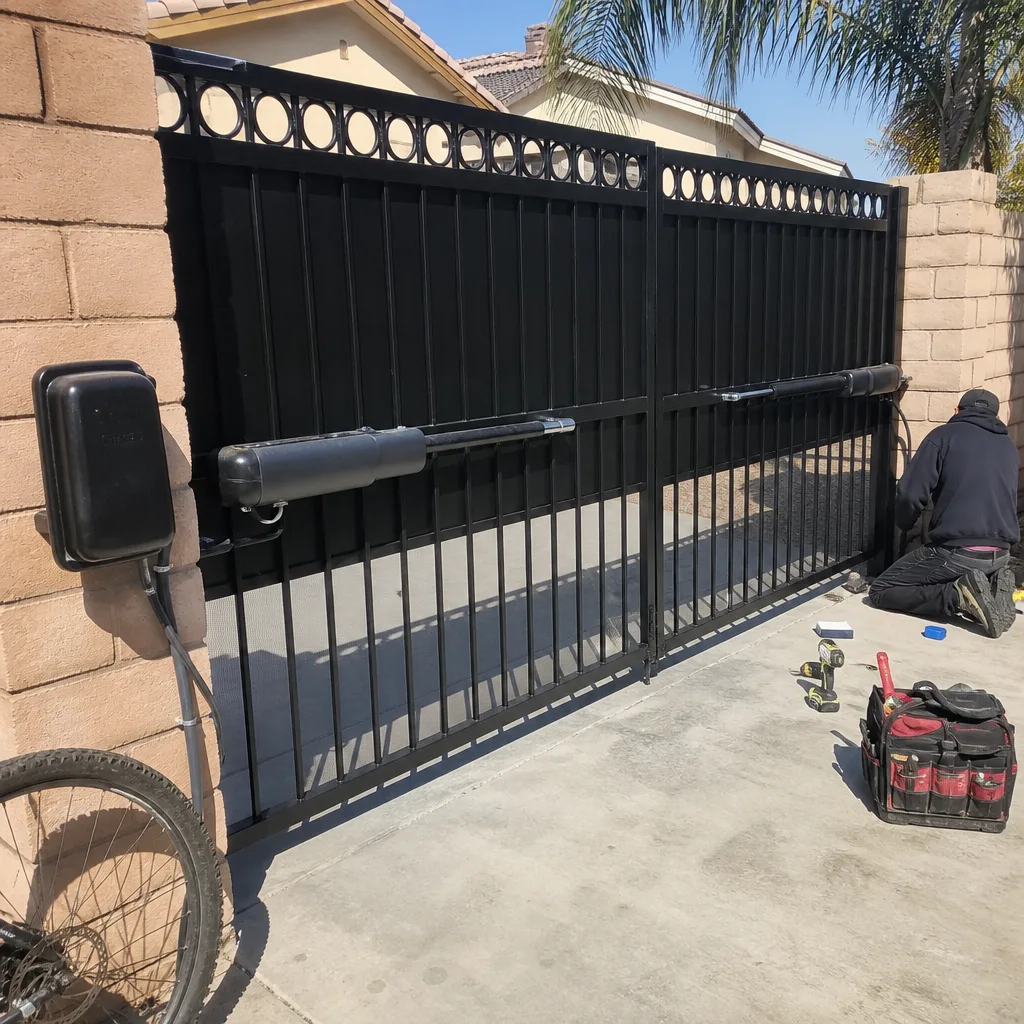
See the difference
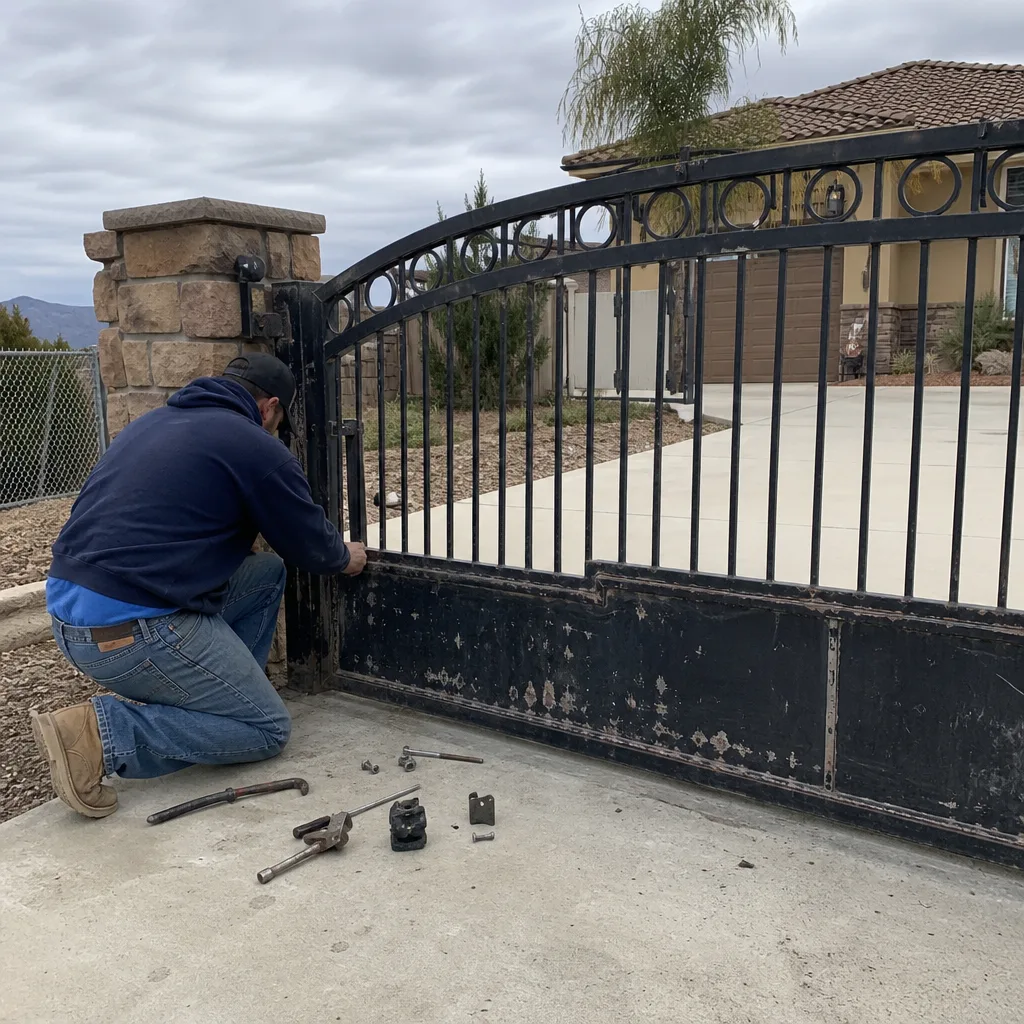 Before
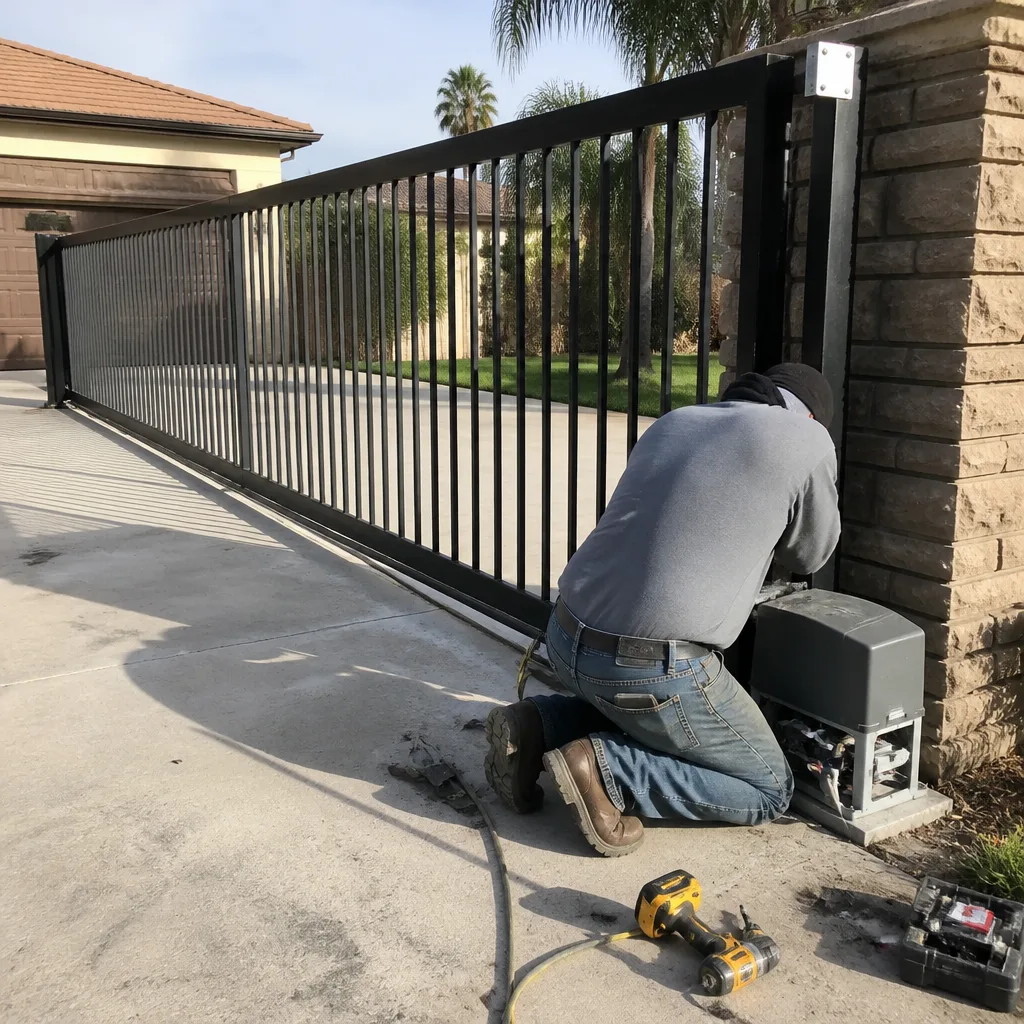 After
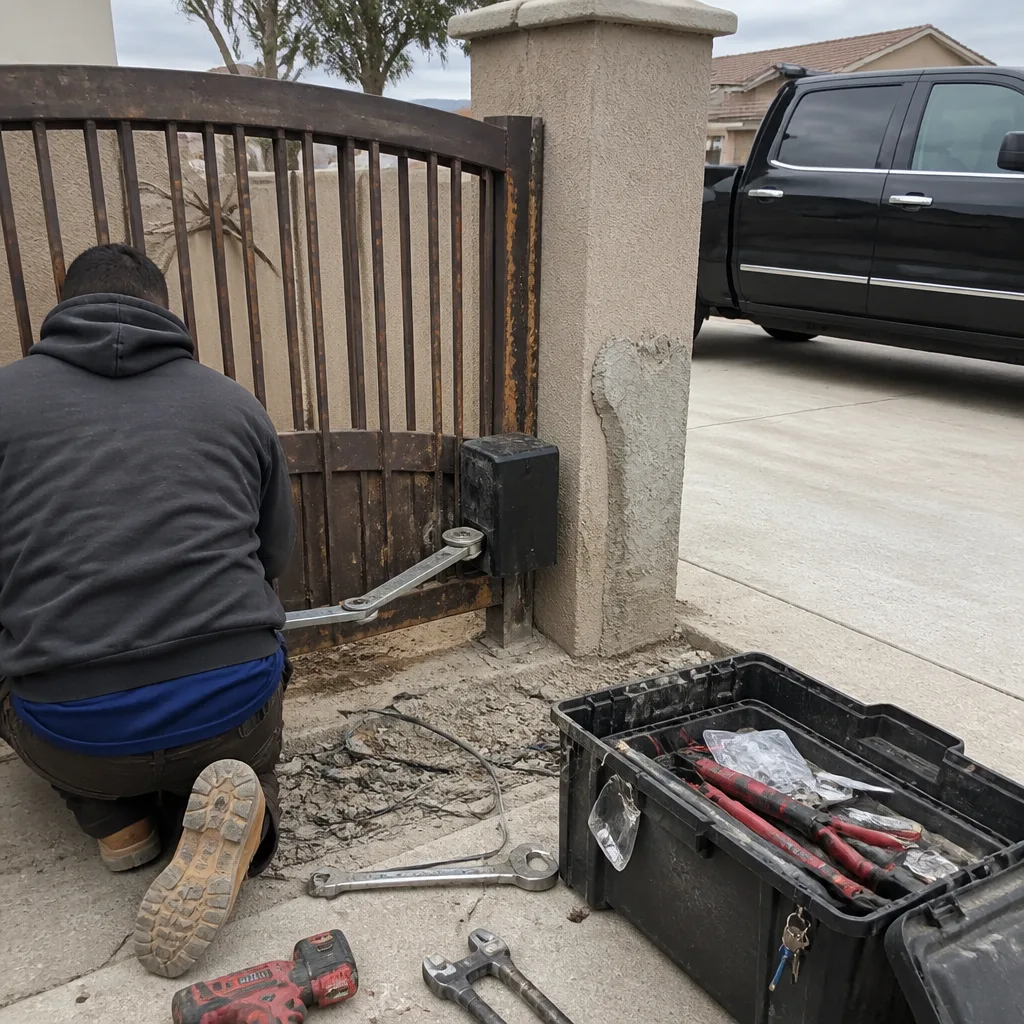
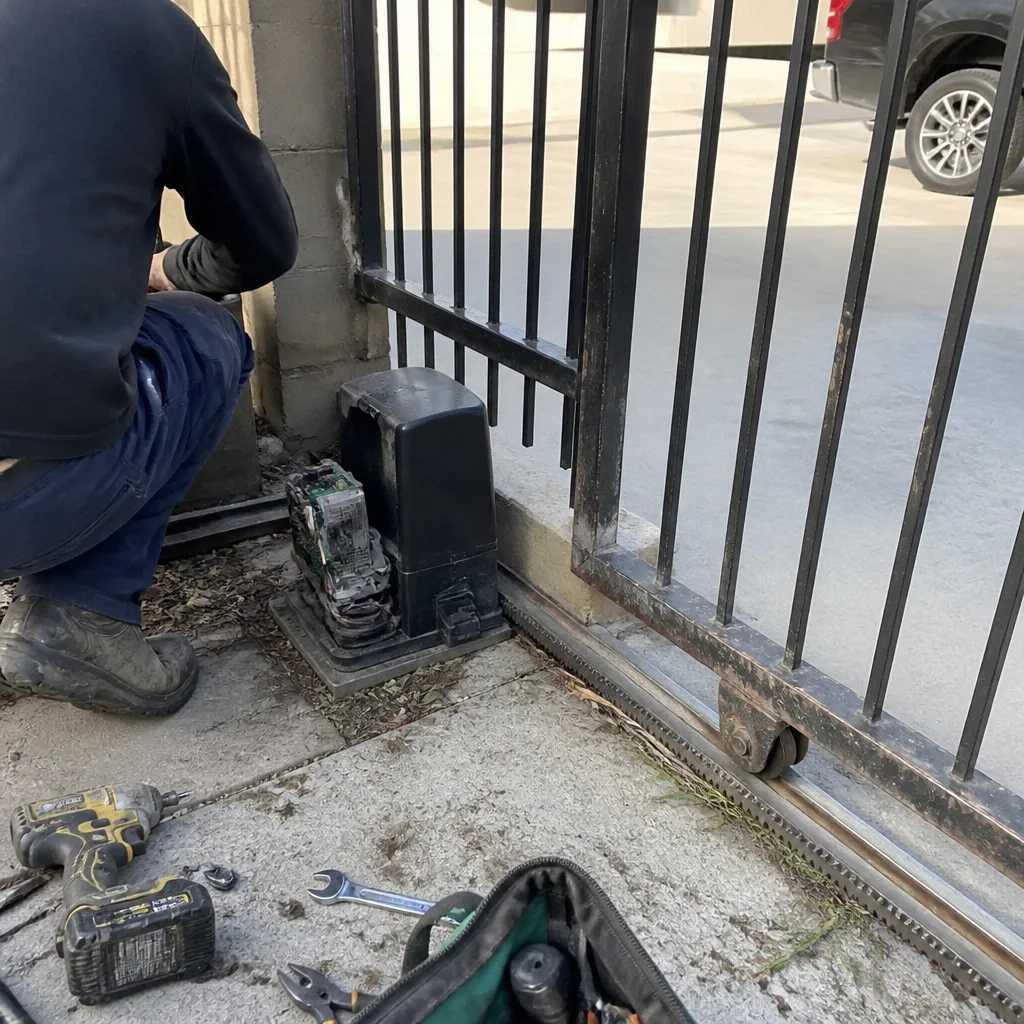 Before
 After
 Before
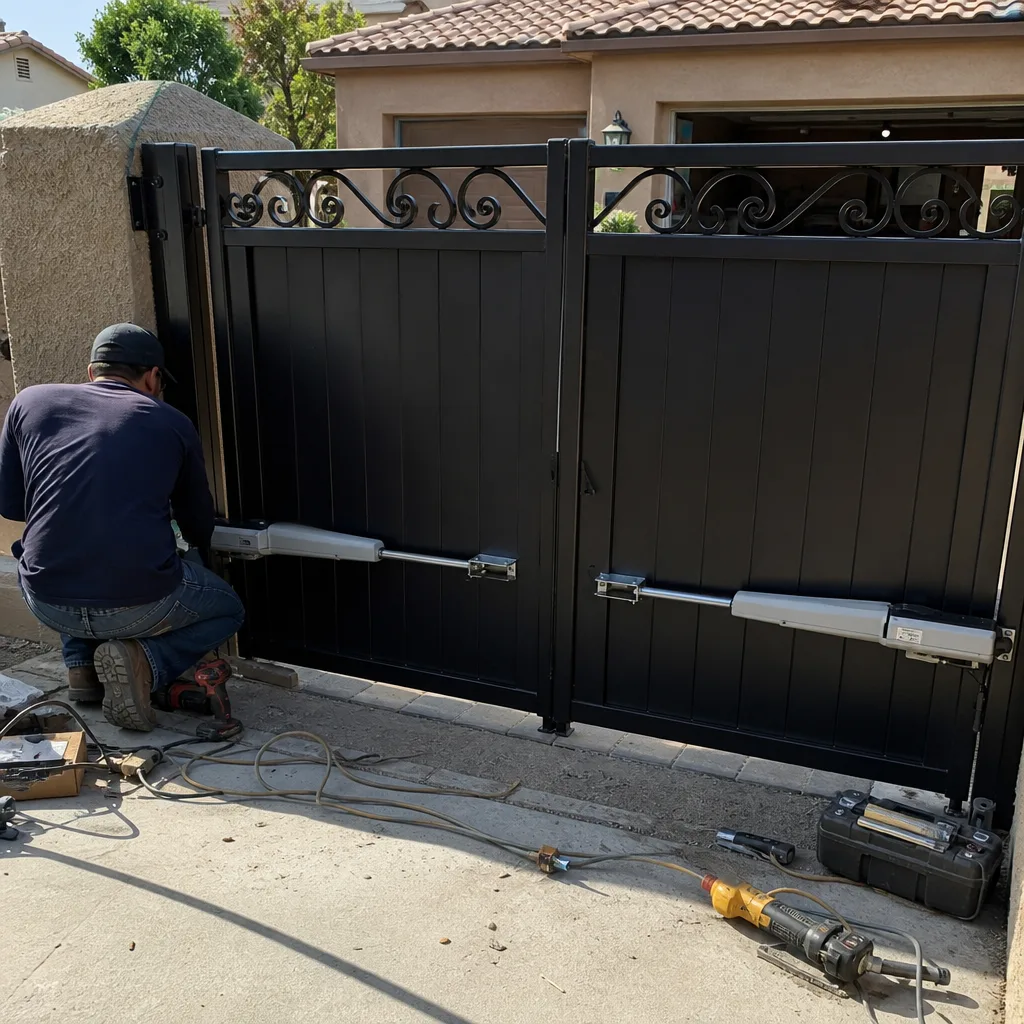 After